Showing posts with label freedom. Show all posts

Monday, July 4, 2016

The PLCB and Freedom

Just something to think about while you enjoy our Nation's birthday.


Sunday, October 4, 2015

The difference between the PLCB and freedom

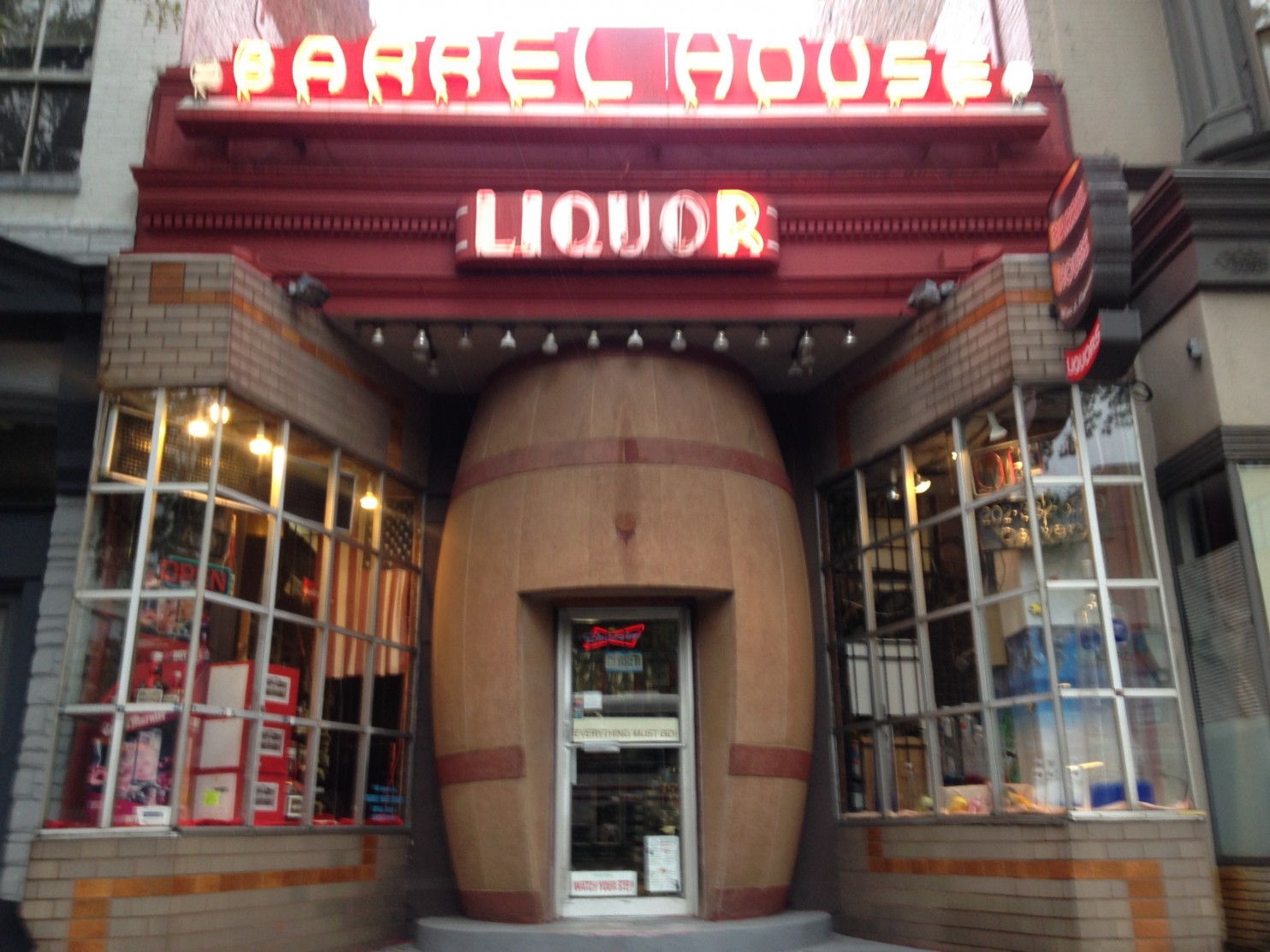
Pennsylvania State Store 1945, an historic mistake


Barrel House Liquors built 1945, possibly an historic landmark


Monday, September 28, 2015

Who can answer this?

As reported by numerous papers...

If, as Governor Wolf is suddenly proposing, leasing the State Store System to a private management firm "is a way to make the liquor stores more profitable and provide better service to consumers"...can the Governor answer the following seemingly obvious questions about this latest example of Wolfonomics?

Wouldn't a fully private system provide even better service to consumers?

Wouldn't a private system that puts wine and liquor INTO grocery stores -- on the shelves -- be even better than a system that puts it somewhere in the vicinity of grocery stores?

Wouldn't a private system that allows for different levels of service -- small neighborhood stores, wine or whiskey specialty stores, huge discount mega-stores -- be even better than only one that provides only one level of service, for every store, in the entire state? (Keep in mind: it would still be illegal to go across the border.)

Wouldn't a private system that stocks more items than the entire State Store System stocks (and actually has them, instead of just listing them online) now be even better for consumers?

Wouldn't a private system that at least triples employment (as shown by the experience in Washington State and Alberta, which both fully privatized their monopoly systems) be even better for the state and the citizens that are employed than a system that limits employment and doesn't allow any small businesses?

Wouldn't a private system that triples or quadruples convenience (as measured by number of stores) be even better for the consumer than one that will still limit convenience to fewer stores than there were 40 years ago?


Wouldn't a private system where many suppliers try to bring their product to market be even better than one person or department selecting for the entire state? (In case you missed it, this is what happens when one person has that police-enforced monopoly power.)

Wouldn't a private system be even more responsive to consumers needs and wants, since the individual stores would have to compete for your business, rather than you still having no other choice than the monopoly State Store System...whatever the new name they slap on it is?

Wouldn't life just be far better if Pennsylvania had a normal liquor retail market without the state being involved in retail and wholesale at all?

You bet it would.

Monday, February 16, 2015

Liquor & Guns

The people's right to trade freely with their neighbors and those in neighboring states shall not be infringed. 

One line like that in the Constitution would have rendered the PLCB largely impotent, but it didn't work out that way. The right to bear arms is guaranteed by the Constitution. The right to buy alcohol is not. Both have laws governing their sale and use, but only one has the state trying to make sure you can get it: Liquor. 


Proponents of the State Store System are always pushing for and bragging about having more sales. They want to make sure that all the citizens can buy booze, but they don't want to make sure you can buy a Constitutionally guaranteed item, or have freedom of choice or be allowed to participate in interstate commerce. That, of course, would puncture their precious monopoly, and show how non-competitive they really are.

But this is -- supposedly -- all about control. Let's look at that whole concept from a different angle. If you are like me or most people I know, you probably think guns are more dangerous than a bottle of Captain Morgan. But according to State Store-style thinking, you would be wrong. I drink, and I also shoot. I probably drink more often than I shoot, but it's close, since my range is only a mile away. Let me tell you: I worry more about the guy next to me at the range than I do about the guy next to me at the bar. Just think about these comparisons.
  • What takes longer to buy: a special order bottle of liquor or a special order gun (even with the federally-mandated wait time on gun sales)?
  • As a private citizen, you can sell guns, but you can't sell alcohol beverages.
  • Sell a bottle and you can get fined $4 an ounce and go to jail.  Sell a gun...and you get cash.
  • If you're 18, you can buy a gun; if you're 14, you can get a hunting license. Buy a beer when you're 18, and you can LOSE your license.
  • Most places you are allowed to open carry a gun on the street in PA ; most places you are not allowed to carry an open bottle.
  • If you are a resident with the proper permit, you can have a loaded gun on the front seat of your car. If you have an open bottle, there is no permit you can get.
  • If you are visiting from out of state and have a gun in your trunk and want to stop and take in any of Pennsylvania's scenic attractions as you pass through the state -- it is perfectly legal.  Have a bottle of wine from New Jersey in your trunk and make that same stop? You can be fined, and your wine will be seized and destroyed. 
  • You can bring a number of guns into Pennsylvania without any special licenses or forms and shoot.  You can't bring any bottles of wine, beer, or spirits into the state -- legally! -- without special licenses or forms which the PLCB does not even make available to you.*
People who use guns professionally in their job have to be licensed, but people who sell alcohol professionally (like bartenders) don't. They don't have to be certified by the state in any way, unless and until they make an illegal sale, which seems to me like closing the barn door after the horse ran away. Our State Store alcohol sellers don't even have to be certified in any way at all, nor are they ever checked for illegal sales (they rely on 'self-reporting'). Does anybody find this strange based on all of the above?

Most states have figured out how to regulate the sale of alcohol and not treat their citizens like children. If the liquor laws in the state were even close to being like the gun laws, there wouldn't be a privatization effort (or a modernization one either) because the dead hand of leftover Prohibitionism wouldn't be on the backs of the residents. Since that isn't going to happen, we have to take control away from the state through our legislature. Give retail back to private industry where it belongs, because when the state decides what you will get, it also decides what you want and does it without any input from you.

We are not safer, we are not better served, and we are not satisfied. Privatize.


* I challenge any reader to try to find the form or forms needed to pay the taxes on 6 bottles of liquor you want to bring into the state. Good luck. 

Monday, November 10, 2014

PLCB - We only like Veterans sometimes...depends on the place and time.

Unlike for far less important holidays, the PLCB doesn't know what the proper plan for Veteran's Day should be. From the 2014 PLCB Holiday schedule:

VETERANS’ DAY – Tuesday, November 11, 2014 
While most Fine Wine and Good Spirits stores will be open per their regularly scheduled hours, some will have alternate hours or remain closed on Veterans’ Day. Please call ahead.


Without Vets you wouldn't be open any other day
.

Support your Veterans. Shop in states that allow you the freedom that they protected and not socialism of the state store system; and tell the new governor: abolish the State Stores, rewrite the Code.

Thursday, October 23, 2014

Springfield and Philly. What a difference not having the PLCB makes!

Springfield Mo., "the queen city of the Ozarks." Population 167,000 with an MSA (Metropolitan Statistical Area) of a whopping 450,000. 
Philadelphia, "the city of brotherly love" (and those who buy their booze across borders). Population 1,526,000 with an MSA of 6 million.

Why am I comparing these two places? They both have a whiskey festival, although technically the one in PA is called the Whiskey and Fine Spirits Festival. "Fine Spirits" apparently includes things like Smirnoff Sorbet Light Peach and Ole Smoky Moonshine Hunch Punch, according to the masters of the mundane in Harrisburg.

So what do you get for your VIP dollars in PA? A chance to taste 304 spirits (really only 292, because some are listed twice!) of which about half (151) are something I would call whiskey or whisky. In Springfield you get  at least 200 whiskies and none are called Hunch Punch. You can look for yourself. Here is Philly, and here is Springfield. Not even close, which just shows the sad state that the PLCB is in. If a magazine can sponsor and put together a pretty good whiskey festival in a town the size of Springfield, but the 3rd largest retailer of spirits has to scrape the bottom of the barrel and still falls short, that speaks volumes about how well the PLCB serves the citizens, and what the industry thinks of our backwards system. Yes, I know the Philly Festival is sponsored by a magazine too but they can't do it without the expressed approval and participation of the PLCB.

Look at all the spirits PA doesn't carry. Must be 100 of them -- but they all are available in the free market. Of course, a number of things at the Philly Festival aren't available in PA either, which means if you really want some, you'll have to break the law to get it. All courtesy of the PLCB, who approved all of this. Even the highlights mentioned by the PLCB are laughable. There are only three, and two are for items you can't get. 

I especially like that Stranahan's Colorado Whiskey will be offered for tasting. It isn't carried at all by the PLCB, so the entire state is missing out on some pretty good whiskey. You can't get it if you did like it anyway. I guess they think the drive to State Line Liquors in MD is close enough. Which brings up the question: why even have this at the festival if the PLCB doesn't carry it? If you have no chance of buying some of the things they are offering, what's the point? It really does show how limiting and ignorant the people in Harrisburg are.

Face it, the PLCB is the reason why we can't even have a half-assed whiskey festival. People that do real festivals laugh at the PLCB and us the same way we laugh at somebody trying to buy a six pack at a distributor. You know that is the way it should be done, but somehow in PA it is never done right.

If you want to go to one of these things, plan a trip.  There are numerous festivals in the US, far better than the PLCB ones in Philly and Pittsburgh, plus you have a chance to actually buy the products you taste and give your money to somebody that cares about the consumer.  DC, New York, Boston Vegas, Nashville, LA, Bardstown, Atlanta, and more  As a consumer you deserve the best, so why support the worst?  The Free Market is the only real Modernization.

Tuesday, July 22, 2014

Did you hear that?

Another domino fell in the fight for open markets and individual freedom as Worcester County, Maryland opened its doors to the free market by closing the county-controlled liquor board that mandated all businesses had to buy from them. (You never hear of places going to the PA way do you?) While the county is still going to try and remain a wholesaler in competition with private businesses, those businesses are free to shop wherever they want.

This could be a good way to gauge if the PLCB would be competitive if faced with free market competition, although the PLCB, with a bloated management and office staff, isn't as efficient compared to the county.

So raise a glass of whatever beverage you enjoy, and wish the people of Worcester County the best as they join most of Maryland and 33 other states in using their freedom of choice. Maryland is right next door, so maybe this will rub off on the group of dunces we have in the Senate as they see how the majority of the country works just fine without any socialist intervention by unqualified cube rats in Harrisburg.

Remember: privatization is modernization! 

Monday, April 7, 2014

Privatization facts & figures


All the arguments against privatization — job losses, revenue losses, public safety endangered, less selection and higher prices, less convenience, and worse service — are addressed and refuted below, with facts and common sense. Arm yourselves with knowledge, and pass it on to your legislators.

Jobs - Everyplace in North America that has privatized some or all of their liquor distribution system has seen an increase in employment. Jobs in the industry tripled in Washington State and Alberta, Canada, the last two places that fully privatized. They doubled in Iowa, which kept wholesale sales but privatized all retail. Are the jobs exactly the same as what they replace? Probably not; are all jobs the same at every store where you shop now? Why would alcohol sales be any different?

Revenue and Border Bleed - Sales have gone up in privatized systems, every single one; how much is dependent on taxation more than anything else. Case in point is Washington State, which already had the highest liquor taxes in the country before they privatized and added new fees. Sales have still gone up in state, and the fee-driven increase in border bleed has increased sales out of state. If they hadn’t raised taxes, in-state sales would have increased even more. Washington State’s border bleed is nowhere near the border bleed rate in PA. The border bleed increase for an entire year in Washington is about a weeks worth of the border bleed PA sees.  While privatization will not eliminate border bleed in PA, it will, just from a convenience standpoint, decrease it. A privatized PA will still not be able to equal pricing of states with lower taxes, but it will make it easier to buy locally. People pay more for convenience all the time, even when less expensive alternatives exist reasonably close. Case in point is buying almost any food or dairy item in a convenience store — “a damn Sheetz,” as Senator Ferlo would snarl — instead of a grocery store. The key is to not raise taxes.

Revenue 2 – Iowa actually decreased their taxation and still reported making more than they would have if they kept their state stores.

Revenue 3 - It isn’t only direct liquor taxation that has to be taken into account. For PA, there will be business taxes that the current system doesn’t pay. There will be more income taxes from owners and workers, since there will be more of each. There will be new jobs created that do not exist under our current system, delivery to bars and restaurants being one example, and increases in current jobs to accommodate new business. Again, just one new warehouse in Washington State employed 1,100 workers, which was more than the entire state store workforce of 937. In the long term, money will be saved by not having taxpayers responsible for future retirement and medical shortfalls. The current amount the taxpayers owe for PLCB pensions is $550 million and is expected to go up to $600 million by the end of this year.

Safety
– Under the current system PA has more DUIs, DUI fatalities, underage DUI, binge drinking and underage binge drinking than 4 of the 5 privately run states on our border, and is just average compared to the rest of the country. Washington State has seen an 8% reduction in DUI crashes and DUI fatalities since privatization. While some may claim that is because there was less policing, policing has no effect on the decrease in DUI fatalities. Alberta, Canada has decreased their DUI fatality rate to one of the lowest on the continent (37% lower than PA) since they privatized, even though they have over 1,300 retail liquor outlets now for a population of under 4 million. Is there a connection? No way to say without further study, but it’s plain to see that privatization didn’t make the situation worse.

Safety 2
– Limiting underage access has always been a point for those opposed to privatization. While the true rate of underage purchases in PA State Stores is not known, since they are never independently checked (or policed in undercover sting operations, as privately-owned liquor stores in other states are) it would follow that it should be about the same as other localities which have similar requirements. Washington State was at approximately 93-94% compliance before privatization and is at about 92% now. Another thing we can learn from Washington State’s experience is how to limit direct unobstructed egress to cut down on shoplifting.

Selection
- Under the PLCB, urban areas essentially subsidize rural areas for alcohol selection, something that would seem to go against their stated mission of limiting access. This is the retail equivalent of PENNDOT making sure there is a Jaguar dealer in every county, because without government intervention they wouldn’t be there. Where the population can support them there will be larger stores, and in areas that can’t support those, there will be smaller stores. This is the retail model found almost everywhere. It is not the government’s job to make sure you can buy a wide selection of booze, especially when they say it’s detrimental (but they still want to sell you more of it). It is their job to make sure that a business climate exists which will allow retailers to try to sell whatever they want within the regulations and restrictions. To date I have not heard a reasonable explanation as to why the state should subsidize alcohol like they do milk.

Selection 2
- That in-store selection will increase is not in question. One only need to look across the country to stores like Bev-Mo, Total Wine, Roger Wilco, Binny’s, HighTime, B-21 and hundreds of others to see what the private sector can provide. They provide it based on consumer demand, not by what a bureaucrat or committee with unknown or non-existent credentials selects for them in a small capital city, far from major markets. What is in question is what variety will be available in rural areas. The answer is the same as it is for any other product. If the demand is there, the market will provide it, just as it does in rural grocery stores and hardware stores. If what you want is not available locally, chances are you will be able to order it, the same as now, only you probably won’t have to buy a case at a time as it is with a good portion of the current system. The entire state of big, small, specialty, urban, and rural stores will be open to you. Not that every store will ship but it will certainly be more than now, because real businesses strive for customer service since their existence depends on it and not state police enforced monopoly power.

Prices
– There are no absolutes in pricing. So much would depend on the system that is selected. Do we continue with the three tier system or do we eliminate one tier and allow more direct buying? Are taxes collected at the wholesale or retail level? Will the taxes increase or remain the same? Depending on what combination is used, you can say that prices should go down or prices should go up. The one thing you can say with certainty is that in a competitive market prices are lower than they would be given the same circumstances in a non-competitive market. As the third largest retail buyer on the continent one would expect the State Stores to have some of the best pricing available in the country. However, this is not always the case and the differences are more than taxes alone can account for.

Convenience – Since closing 20% of their stores in the past 40 years and having the lowest amount of stores per capita in the country (even lower than Utah!) there is no doubt the current system is inconvenient. Quite simply, anything that doesn’t open hundreds, if not a couple thousand more locations will not provide convenience seen in other states, and is a Band-Aid at best. It is obvious the PLCB cannot begin to compete in this area because they can’t afford it based on their business model of having everything the same store everywhere. Don’t let them buffalo you: the PLCB chooses the number of stores to open, not the legislature; the number of stores is not enforced by the Almighty Liquor Code (with the exception of the number of stores allowed to be open on Sunday). So while the population has increased over the last four decades, the number of State Stores has decreased from over 750 to about 605 today. Just to reach the national average, Pennsylvania should have about four times that number. “Modernization” does not begin to answer that issue, with one proposal saying they want to put 400 sq. ft. “stores” inside other stores, which they are already allowed to do now, and have been for at least 30 years. What exactly does that do for the consumer that the same size private store (which they claim wouldn’t provide the selection) would, besides remove that business opportunity from the citizenry?

Service – Unlike other retail stores, if you don’t like the service you can’t go anywhere else. You are stuck with the same training, the same attitudes, the same level of passion. In the world of private stores, if you don’t like the service you can go somewhere else and reward them with your business. The stores with bad service will eventually fail, and if somebody else sees the opportunity another will open. In the private sector you will find stores with a sales staff of well-trained professionals along with stores whose sales staff can barely tie their shoes. You have the choice of what level you require. Same size fits all is not a tenet of retail, although it seems to be gospel for the PLCB. There are private stores who have sommeliers on staff. The whole of the PLCB, 600 retail stores and an entire state’s wholesale wine trade, doesn’t. To be fair, the PLCB does have a sommelier as a part-time consultant. One. Part time. For the entire state. The third largest retail wine buyer on the continent does not have a full-time top tier wine person. I can’t be the only one to think there is something wrong with the system that not only allows this, but doesn’t care.

Privatization does create winners and losers.
The winners are the citizens who now have access to a free market; the losers are those who can’t adapt to the free market system. While no system is perfect, looking at the rest of the country it is easy to see which one is preferred by consumers and businesses whenever there is a choice.

TELL YOUR LEGISLATORS YOU WANT THAT CHOICE!

Wednesday, February 5, 2014

Modernization wouldn't do what the consumer wants -- Part II


Today we are going to look at some other parts of so called “modernization;” increasing the licensee discount from 10 to 18% and variable pricing.  Notice that there is nothing mentioned for the consumer, even though they spend 2.8 times as much as licensees. Why?  Because licensees contribute larger sums than regular people, and since they don’t complain too much, you don’t have to pay as much attention as you do to what the citizens want. Pretty much saying, “to hell with standard practice, no case discounts for you!”

Based on last year’s PLCB sales numbers to licensees, an additional 8% discount would come to around $24,250,000. Where does that money come from?  It isn’t taxes since they are added in before the discount. Everything else stays the same since the discount doesn’t affect inventory or salaries or other costs...so it has to come from what the PLCB calls "profit" (what we know to be taxes that they just hadn’t happened to spend yet). Let’s look how that $24 million ties into the big scheme of things. To do that we have to do some math.


The PLCB had “profits” of $128,356,057.00 after the transfer to the PA State Police, but before the General Fund transfer. I'll be rounding the numbers from here on so they may not match exactly.
According to the PLCB talking heads “modernization” will increase this amount by $75-125 million depending on who you listen to.  Since there is a 66% difference between those two numbers, I’m not sure how accurate their guesswork is. In any case, let's use $100 million and add to that the $24 million that has to be made up from the proposed additional discount for the licensees to bring it to almost as much as they make now. The new total for operating income after PSP transfer is $252.4 million. Add to that number $387.6 million in operating expenses and you get $640 million in gross revenue from sales needed if this happened this year. 


But it didn’t happen this year so let us estimate what next year might look like.  I’ll say that sales will increase 5% to $2.28 billion which means that Sales Tax and Local Taxes will be about $135.8 million leaving $2.14 billion.  From that the 18% liquor tax ($327.2 million) will come out giving us $1.82 billion as sales net of taxes.  Historically cost of goods sold is about 69.5% so I’ll use that. COGS would be $1.26 billion leaving us with $554 4 million


However we needed
$640 million leaving us $85.6 million short and I’m being generous since I didn’t put in any increase for expenses. Now the PLCB just can’t raise prices of X number of products by $85 million and call it even.  They have to raise prices enough so that after all expenses and taxes come out they have $85 million extra left over. Remember they had to sell almost $2.2 billion last year to get $128 million, so working off of that, they need to sell $3.8 billion worth of product to get to $252 million and we know that isn’t going to happen. They could raise the markup 65% or they could reduce costs by closing 25% of the stores and I don’t see that happening either. So they have to get the money from somewhere and “Variable Pricing” is one of the places they say it will come from. Not all of it but certainly a large portion.

Just what is the PLCB version of variable pricing?  Unlike a pure model the PLCB has to keep the prices the same state wide instead of regionally, by neighborhood or even by store. Also, unlike other variable pricing models of commodities, the consumer has no negotiating power other than to drive to New Jersey (which they probably should have done to begin with). Think Airline tickets if you need another example of variable pricing.  The price changes by demand, time of day, competition and other factors so while you may pay $200 for that round trip to Orlando, the next person could pay more or less.  


Now I don’t give the PLCB credit for being able to change pricing in real time as the airlines do.  They don’t have a good history with computerized things. The intent is the same though.  Lower prices on slow moving items to get them out or move a specific volume of items, and stores may strategically raise prices on more popular or high demand items when possible to increase profits.  A good overview is here. Something the PLCB should pay attention to: “When variable pricing can be tied to differences in costs of doing business, different prices can be justified; otherwise, brands run the risk of being seen to be opportunistic and unfair, likely damaging their reputations.”

I don't have any idea how many or how much prices will have to go up to get near that magical $85 million extra (and I don't think Senator Ferlo really does either), but it isn’t a small amount, considering that the PLCB only clears an average of 92 cents per bottle and it would have to go up to $1.80 per bottle if applied evenly and we know it isn't going to be applied evenly. Maybe some other things will reduce that or maybe not.  I’ll look further into some other “modernization” statements in another installment.

Privatization IS Modernization, accept nothing less.