Showing posts with label licensees. Show all posts

Friday, April 3, 2020

Time for a Change.org

With the State Stores closed, and the PLCB's website essentially non-functional -- 

With restaurants and bars across the state reduced to take-out business --

With the PLCB refusing to service any but the largest accounts (while the Wolf Administration tells Pennsylvania that we should look to the private market to meet the demand caused by the closed State Stores...while denying that market the right to sell spirits)

With thousands of businesses on the brink of failure, tens of thousands of people unemployed -- 

Someone has to do something. 


Why not you? Sign this Change.org petition, asking Governor Wolf and the Legislature (or the PLCB, why not?) to immediately allow the sale of wine and spirits to-go (or local delivery) by all licensees, including beer distributors, through the end of 2020. Give them a chance to make the money that will allow them to stay open, employing some people, and giving others hope for re-employment when the crisis ends.

Buddy, can you spare a signature? 
Before you say, 'Oh, those Change.org petitions don't change anything,' last week a petition just like this one succeeded in getting the government of Ontario to allow restaurants to sell wine and beer to go. We can do that here, just as quickly, just as easily.

Until then, Pennsylvanians will continue to cross the borders, spreading the disease. Those taxes will be lost to the state, where they could help pay unemployment benefits, while the PLCB flounders, trying to serve the whole state from three warehouses with a patched-up website (while the wholesalers who service the PLCB's operations have their offers to help rejected), literally filling only hundreds of orders out of hundreds of thousands of attempts to place an order. 

Is this a total solution? No.
Will this save every restaurant, every bar? No.
Will it adequately compensate every beer distributor for the damage to their business? No.

Is it better than what the State's doing now?  Hell yeah. 

Over 11,000 people have signed as of April 14. This is not a fringe position. 

Please. Sign the petition and share it. Thank you.

Tuesday, January 3, 2017

New Year Wishes

I wish the PLCB would stop bragging about going from 601 stores to 608...when they used to have 760.

I wish the PLCB was less focused on hiring "good ol' boys" who know their cockamamie 'system'...instead of people who actually know liquor and liquor retail.

I wish the State Stores were even more convenient than when there were 760 stores.

I  wish that sometime, before the end of the decade, all the State Stores at least had the same name.

I wish that "wine specialists" were actually required to have formal, industry-recognized credentials before they were called "wine specialists."

I wish the people who select wine for the entire state had to have even better credentials than the "wine specialists."

I wish there was somebody at the PLCB who really knew whisk(e)y, above what they read in the labels and importer sell-sheets.

I wish that the Legislature understood that "flexible pricing" is PLCB-speak for "gouging the consumer."

I wish that the Legislature would stop mucking around with beer sales and simply let everybody with a license sell any size or quantity.


I wish that if we couldn't do that, at least the Legislature were smart enough to realize that not every gas station and grocery store wants to be a restaurant, and come up with a purely take-out license.

I wish that if we still have to keep the licenses as they are, we could at least go back to the older, higher quota of licenses per county, so that independent, Pennsylvania-owned small businesses had a better chance of getting one.

I wish that the BLCE was funded at the same level as 2000 so that all these new places could be checked for compliance...including the State Stores, which never are.

I wish that the FBI, once they complete their investigation of PLCB leadership, will come down like the Hammer of God on all involved.

I wish that the PLCB knew something about marketing to realize the exact same selection doesn't have to be sold at every single store from Center City Philly to beautiful downtown Snow Shoe, and that specialization in retail works for a reason.

I wish that the PLCB knew something about math and economics before they made decisions.

I wish the PLCB had people with real world experience make those decisions.

I wish that the PLCB and the Legislature would take a road trip across the Delaware and see what a real "superstore" looks like.

Most of all, I wish that we end this farce of "acting like a business" and let real business handle this business, and leave the PLCB free to do what government agencies are supposed to do: handle regulation and enforcement.

When something doesn't work, or work well, for 83 years, you don't "modernize" it.

Privatization fixes all of the above. Let's stop trimming around the edges and get it done.

Wednesday, September 28, 2016

Forget the Zombie licenses: raise the quotas!

There's a lot of hand-wringing and bluster going on about one of the provisions of Act 39, the "epic" change to The Almighty Liquor Code (as trumpeted by Governor Wolf, who didn't do anything except sign it). It's the so-called "zombie" license auction, wherein the PLCB has been directed to sell off the approximately 1,200 inactive liquor licenses that are in escrow, suspended, or otherwise not being used.

Many people are freaking out about this, but a lot of us wonder what the hell zombie licenses even are. Why aren't they out there earning a living?

Our weak-kneed, nanny-state legislators are more to blame for the current idiocy than you may realize. The idea of selling the zombie licenses is a futile attempt to solve a problem they created. For reasons known only to whatever power you pray to, the legislature, throughout the past 82 years — on BOTH sides of the aisle — dislikes bars and restaurants more and more with each generation.

When the PLCB was first created, it was decided that your great-grandparents would be allowed to have one "R" license for every 1,000 citizens. Then with Act 702 of 1951 that number was increased to one for every 1,500 citizens. Which was great for the "R" license owners, which was probably reflected in the campaign donations from the tavern and restaurant owners associations.

Then in 1972, Rep. G.R Johnson (R-Delaware) decided that the citizenry were eating out and having entirely too much fun, so he put forth HB 517 which (along with letting stadiums sell beer on Sunday, the sweetener) proposed raising the quota from 1 per 1,500 to 1 per 3,000 residents. After a few rounds of amendments, it was eventually set at 2,000. Why the House and Senate majorities thought this was a good idea is not recorded. So HB 517 passed and was signed into law as Act 108 of 1973.


Between 1935 and 1972 Pennsylvania's population went up about 22%, but the number of licenses per capita was decreased by 50%, relative to the original quota. A prime example how the legislature made things even worse than old Gifford Pinchot wanted in 1934!

But they weren't done. Deciding they hadn't sufficiently put the populace under their control, the legislature again took up the quota system in 1989. Rep Eugene Saloom (D-Westmoreland), the Chair of the House Liquor Control Committee, decided that he had to protect small businesses that didn't yet exist by raising the quota to 1 per every 3,000 residents.

This is a quote of the logic (or lack of) for his decision. "Some of the urban area's population is shifting to the suburban districts, and one thing they don't need are additional beer distributors and additional bars. We know that if it isn't changed there will be a lot of people in business not making a profit." A quota of 1 per 2,000 had allowed people to make a profit, but even if that didn't change in the suburbs, it suddenly that wasn't enough. Saloom's HB 1946 marched on to become Act 160 of 1990.

Now you can think that maybe this guy is just an idiot. But that means the entire legislature were idiots too. While the House and Senate were again controlled by the Democrats, this passed with overwhelming bipartisan support: 187-4 in the House and 48-0 in the Senate. Why was this so important?

It's 1991, population has increased only 150,000 (1.2%) since the last time the quota was raised in 1973 and the licenses were reduced by a 50% ratio AGAIN! This must have made the restaurant and tavern owners ecstatic. I'm sure that contributions just rolled in over and under the table.

To exacerbate the problem, licenses could be held without being used indefinitely, and those that were turned back into the state disappeared from the market completely, reducing the total number under the quota system, and thereby raising the price of those that were still active. Pretty nice when the state itself limits your competition, reduces entry into the market, and gives you ownership of the license unlike any other licensed activity.

Pennsylvania Legislators, both Republican and Democrat, need to pull off the blinders and stop putting band-aids on the sucking chest wound that is Pennsylvania alcohol policy. They can start by doing things that benefit the citizens. Not the clerks. Not the Tavern owners. Not the Beer Distributors. US.

Start with changing the quota back to what the cowering semi-Wets of 1934 thought was sufficiently draconian: 1 license per 1,000 people in a county. If that's too many, the market will sort it out quite efficiently, like it does when there are too many Starbucks in an area.


(edited 9/30/16 to update 1951 quota info)

Friday, May 20, 2016

Quick, Clean Up Those Liquor Laws: The Neighbors Are Visiting!

5-20-2016: This piece has been updated after a full reading of the bill as released by Sen. McIlhinney's committee and subsequently swiftly approved 50-0 by the Senate. Updates are italicized; deleted words are struck out.


This headline in Tuesday's Inquirer caught my eye this morning:

Pa. May Ease Liquor Rules For Democratic Convention

Here's the piece, describing likely temporary changes in The Almighty Liquor Code for the duration of the Democratic National Convention in Philadelphia later this summer.

Short version: the Legislature feels politicians' pain, but not yours.

"C" is for "Cheat"
Less-short-but-still-short version: Bars can stay open past 2 AM while the convention's in session — four whole days — if they are granted a special license, which costs $5,000, and is only available for events directly related to the convention (What's odd: it's not clear if the event license applies to individual licensees, or the event premises, or wherever the "national event" decides to serve booze). Even more galling: for that time period only, these special licensees will be able to buy receive booze directly from out of state for those four days, unlike you...ever! This is so state delegations can get their favorite hometown booze (Washington State wines, Maine craft spirits), recognizing that (as our old pal, Senator Chuck McIlhinney, who passed the House bill out of committee, put it) "we're not going to put it in our liquor stores for four days and then sell it to them and then have to be stuck with it." Well...probably sounded good to him at the time. What Chuck probably meant to say was that it would be unreasonable to expect the clerks to have to deal with a bunch of interesting new products, so let's arbitrarily bend the law instead. Right, Chuck? That's what you do over in the Law & Justice Committee, after all.

Our version: Someone in the Legislature got a rush of blood to the brain and realized that conventions run on booze -- they do, even the Democrats, and don't even start on the whole weed thing -- and that our booze laws suck so bad that it could hurt future convention business...no, wait, if that was it, they'd make these changes permanent for Philadelphia and Pittsburgh, because that's true for every convention, not just political ones.

No, this is, as usual, about different rules for the ruling class, and charging you to pay for them. Because if you think that the bars who get those special licenses are going to pay for them in four days, or even try to pay them off in four days, you're dreaming. You'll be paying for them. Lucky you. (Okay, what's likely to happen is that some deal will be struck that the licenses are paid for as part of the venue payment, or covered by the donations of free booze.) And if the licensees are smart, they're going to stock up like mad during those four days, get Total Wine to ship in truckloads of booze to beat the PLCB like a gong. There is no limit on how much booze can be brought in, either. In the words of the bill as it stands, the licensees may "ACCEPT, IMPORT, POSSESS OR RESELL 
DONATED ALCOHOL ACQUIRED FROM LICENSED AND UNLICENSED ENTITIES SO LONG AS IT RECEIVES BOARD APPROVAL PRIOR TO DOING SO. THE DONATED ALCOHOL DOES NOT NEED TO COME TO REST AT A PENNSYLVANIA LIQUOR STORE PRIOR TO ITS USE BY THE PERMIT HOLDER, UNLESS THE  BOARD SO DIRECTS. MALT OR BREWED BEVERAGES DONATED UNDER THIS SECTION SHALL NOT NEED TO COME TO REST AT A LICENSED IMPORTING DISTRIBUTOR PRIOR TO THEIR USE BY THE PERMIT HOLDER, SO LONG AS
THE DONATED BRANDS ARE REGISTERED WITH THE BOARD AND THE BOARD APPROVES THE ARRANGEMENT." Note that this kind of arrangement would be exactly the kind of thing that could normally cause a licensee to be fined, possibly even lose their license.

Is that even how the law would work? Who knows, because McIlhinney had his fingers all over it, so it's likely to be something completely novel that no one asked for or wanted. Would you pay $5,000 for the "right" to be open from 2 AM to 4 AM for four days? For a bunch of drunken strangers? (On the other hand, would you pay $5,000 for the "right" to buy booze from regular wholesalers, rather than the PLCB? Just for the novelty of someone delivering the booze to you for a change? Hey, maybe!)

Leave out the longer hours, which is window-dressing: all they'd have to do to achieve this is to tell the BLCE to stay away from Philadelphia and give the bars the high sign. This is nothing more or less than an admission that the PLCB can't deliver what wholesalers and retailers in other states do routinely: put new products on the shelves (not in some airy-fairy "online store" that no one can search properly) in a timely manner by delivering them directly to bars. An admission that the state's booze monopoly is a failed, broken system that can't do what business needs.

If it needs to be fixed for four days...it needs to be fixed for good. And we know the way to fix it. The Inquirer knows, too. They ran this editorial on May 20: have a look. The House GOP caucus should belatedly redeem themselves by refusing to pass this deeply cynical bill. Failing that, the Governor should veto this unabashed deal-making. And if they don't, we the people should raise hell.

Privatize it. The time is now. 

Wednesday, November 11, 2015

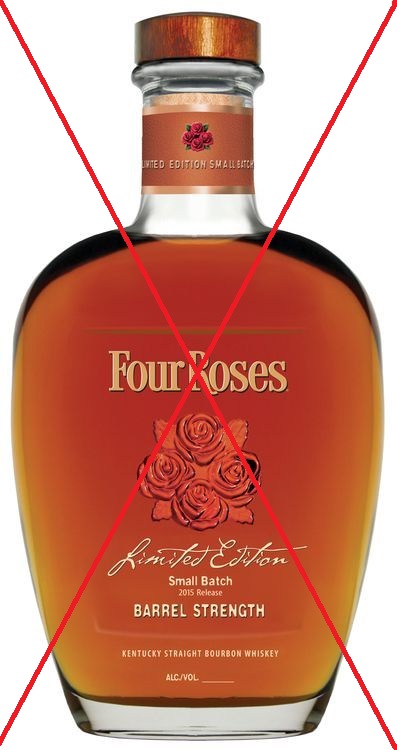
A PLCB Mystery - The Case (or Ten) Of The Missing Four Roses

Ever watchful, our intrepid sleuth is always on the lookout for ways the PLCB pays lip service to taking care of the citizens. 


On August 21st, Four Roses sent out a press release listing what this year's Four Roses Limited  Edition Small Batch will be, and more importantly, how MANY they planned to make. There was to be a release of about 12,600 bottles total. From what I have learned over the years, about 80% stay in the U.S., and the remainder are for the rest of the world. Can I prove it? No, allocation is a very closely-held card by the distillers and distributors, since there is always somebody who will take issue with it. Needless to say, like any other business, good customers usually will do better than ones that are more difficult (I bet you can see where this is going).

So about 10,000 bottles of this year's Limited Edition were destined for U.S. customers. Dividing up by state would yield 200 bottles per state. Great for North Dakota and Rhode Island; not so good for the rest of us. Allocating by population is a more fair way to guess, and with 4% of the U.S. population, Pennsylvania would get about 400 bottles.

So how many did we actually get? 24 bottles were announced to be sold in a lottery; registration ran from 8 a.m. Oct 26th to 11 p.m. Oct 31st. (No surprise that it didn't actually open until about 8:30 a.m.) But wait!  There's more! Right after the lottery was announced, I wrote a letter to the PLCB asking where all their buying power was and why they had such a poor relationship with the distributor that we got well below what we normally would have. Imagine my surprise when 3 days later, the PLCB announced they had gotten another 42 bottles to raffle off, for a grand total of 66, of which 16 would go to licensees.

No. This is not for you 
silly PA consumer.
Is that fair?  We'll never really know, because we won't know how many bottles the PLCB really had, since they had it listed as an SLO item in August, weeks before the lottery announcement. However, if you called and tried to order it you were told it was a "licensee only" item. So how many were sold to the bars and restaurants the first time, before they got ANOTHER chance? Why did the state get so few to begin with? Is this an indication of what is really thought of the PLCB? Or did the public just get screwed by the PLCB because a normal amount was allocated and they sold it to licensees first?

Also, who is watching all these lotteries?  The PA lottery is certified by outside public firms, the PLCB lottery is...what? I haven't seen or heard about any safeguards in place. Who checks to make sure this is all on the up and up? Are we just supposed to believe them? I'm not saying it isn't legitimate, but I am saying it is hard to believe, when the transparency at this agency is like looking in the Susquehanna after a rainstorm. They certainly haven't done anything to earn my trust so far.

Get rid of the state store system and move Pennsylvania back to normal.


P.S. For those keeping track we reached a small milestone. This is the 400th post of the blog.  It took us seven and a half years to get to this point.  Here is hoping that our job will be done long before we reach 500.

Thursday, April 9, 2015

Bare minimum is too much customer service for Pittsburgh state store

PLCB Employee Customer Service Briefing
According to a few sources the retail customers -- the taverns and restaurants -- who are forced to buy their booze at store #0247 (5956 Centre Ave, Ste 201, Pittsburgh) are being "coddled" too much.and have the gall to expect the same level of service that is given by free market (or what we call "regular" or "non-monopoly") stores or other vendors. Never mind that almost every other vendor a business has to deal with will deliver: the state stores don't. One would at least expect that all the time they save by not delivering could be put to use fixing any problems that may occur in licensee orders. Don't bet on it.

While telephone orders are still taken, most licensees use the computer automated system to place their orders, thus removing most chances for human error. Shortly, it will be mandated to be all computer driven by LOOP (Liquor Order Online Program if I remember correctly) so any mistakes from phone orders will be gone. But the licensee may still order the wrong thing, and the State Store may put the wrong product in the box, or order the wrong item from the vendor. Switching out a wrong item in the box is more of a pain than a problem, but when the wrong item is ordered, it may take weeks to straighten out.  It can be even more difficult because there are items offered to the licensees that are not available to the public, so they're not on the shelf somewhere else, where they could be pulled to correct the order.  (Yeah, that's right: the PLCB not only offers limited selection to you and I, they don't even offer us everything they have!)

Given the frustration waiting that long must create, sometimes the licensee involves the vendor, through the state store, to help out.  That seems to be too helpful for the manager at store 0247, so now "...employees are no longer allowed to call the vendor when they send the wrong product." That's according to Richard Swartz, a Pittsburgh bartender who's involved in this ridiculous pissing contest.


Ryan Eberlein, another licensee customer of store 0247, backs up what Richard said, "This is my store and I know this manager, and it's no joke." He added, "Also, let's understand the premise of this relationship... if the state accepts and sells the wrong product -- doing the only thing required of them, incorrectly -- we have to bring it to their attention and wait weeks to months to get it resolved." He continues, "Only a cartel can treat its customer with such disdain and disrespect. Only a monopoly can say basic customer service is too much."

Now in a normal state with normal liquor retail, Ryan could find a store that not only treats him better, but also helps resolve any problems he may have. Not to mention, they'd deliver, saving him time to do other things to help his business. Under the State Store System, he doesn't have that choice. All the stores are the same, all the products are the same, the lack of delivery is the same -- everything is decided by Harrisburg, where the only interest is for doing the minimum amount required to save their jobs, not to satisfy the consumer. Are there exceptions, clerks and bureaucrats who do try to stem this sluggish tide of indifference? Of course...and they are just that: exceptions.


We'd like to thank Ryan and Richard for speaking up, as the PLCB is well-known among licensees for practicing a petty and vindictive retaliation when their idiocy is pointed out. If that happens, we encourage them to report it. 

Tuesday, June 12, 2012

Crunch Time -- A Bill is in Debate

I don't have time to explain why I've been silent here for over six months -- a lot of it was work, and some of it was that I did a lot of talking on Facebook, which I now realize was wasted -- but that's not important right now. What is important is that HB 11, a privatization bill, is being debated in the Pennsylvania House today. Debate began last night, and continues this morning. That's exciting, but...the bill needs a LOT of work.

I've got some suggestions. Oddly enough, I got into an email discussion with Jon Geeting, who's involved with the Keystone Politics blog, "Pennsylvania's source for liberal political news and commentary." Jon's an example of why this is not your typical privatization battle, which usually lines up as liberal vs. conservative, free marketer vs. union supporter. Jon recognizes that the system we have is not as it should be, and while we don't see eye-to-eye on the taxes -- though we're not 180 degrees opposed -- we agree on a lot about the state's dysfunctional liquor code.

As I said, we got into a discussion recently, and came to six points that we agreed on, and think should be in any Pennsylvania booze privatization bill. Note that there is nothing in here about the actual end of the State Stores -- except that point 1 covers that effectively; they won't survive the competition -- or the union, because that's up to the legislators. Jon posted them yesterday at Keystone Politics, and I realized that it was time to blow off the cobwebs here and get back in the game. Here are the six points. They're somewhat controversial...in Pennsylvania. In other states, they're ho-hum standard.

1. Let supermarkets sell beer, wine and liquor, effective immediately. -- In Portugal, they sell bottles of whiskey in coffee shops; you can buy beer in supermarkets in most of the states that border PA, you can buy champagne at convenience stores in Virginia...and yet, no one's rioting in the streets. What's the big deal?

2. Charge a flat fee to any business that wants to sell booze – no cap on licenses. -- Pennsylvania's licensing system is broken, it makes no sense for the state, and the artificial limits on licenses penalize areas that are experiencing growth. Liquor licenses sell for upward of $300,000 in some counties...and the State sees only a puny annual fee from that. Get smarter: charge what a license is worth, and charge it every year.

3. Tax volume, not value. -- Pennsylvania's hated Johnstown Flood Emergency Tax is not going away; the State gets revenue from that tax, and booze taxes are an unfortunate reality. But most other states have a gallonage tax, that is placed equally on wine and spirits by the "proof gallon," a measure of volume of alcohol, rather than the way Pennsylvania does it, which is by a percentage of the price. What Pennsylvania's tax does -- unintended consequences -- is make blotto booze (cheap wine, cheap vodka) even cheaper, while making better booze even more expensive. If we're taxing alcohol for some health or moral reason, the gallonage tax is more honest; if it's just about raising revenue...well, why not put an excise tax on everything and share the pain?

4. Allow Pennsylvanians to buy wine, spirits, or beer in other states, or through the mail/Internet from anywhere, without penalty. -- End the police-enforced monopoly. This is pretty simple. The only reason this unAmerican, anti-federal "stop you at the borders" law is even allowed is because of an overactive interpretation of the 21st Amendment. After all, I'm allowed to buy gas, food, books, clothing, whatever I want in New Jersey or Ohio; why not booze? We're American adults; we deserve to be treated that way.

5. Allow any authorized retailer to sell beer in any volume they desire, without fake restrictions. -- End the case law. Now. End all artificial restrictions on how little beer someone can buy in a single purchase, as well as how much. The case law and its tavern corollary, the "two sixpack" law, make no sense. They are there as a favor to business, not for any kind of health reason, and certainly not for the Pennsylvania consumer. Or the Pennsylvania voter. The Legislature has fiddled around for years over this simple change. Shut up and do it.

6. Open up the wholesale market to more competition. -- More wholesalers means more competition, which means better prices and service. Charging $100 million for a wholesaler license is not a way to get more wholesalers. End state-required exclusivity contracts for products; if a wholesaler and producer/importer want to enter into an exclusivity contract, that's up to them and their lawyers, but the State has no interest in mandating it. Another law that was written by the industry...and it's about time we got laws written for the consumers.

These six points will make me no friends in the industry. They completely upset the apple cart, and may ruin long-established family businesses. But they will create new businesses, and the solid family businesses will thrive and succeed...as long as big businesses, chain retailers, aren't allowed to write this privatization bill.

We get one shot at this. Get in touch with your Representative now, today! Tell them you want a better privatization bill. You want a fair privatization bill. You want them to work for you.

Saturday, November 5, 2011

Retail Booze Privatization: why HB11 doesn't cut it

HB 11, a bill proposed by House Majority Leader Mike Turzai back in July, is still the standard bearer for privatization. Privatization currently has the support of Republican Governor Tom Corbett, who has majorities in both houses of the legislature (although the Senate Republicans are stalling, possibly trying to squeeze out a deal on a Marcellus Shale "tax"). To make things more likely, the PLCB has obligingly stumbled badly in the past two years with: 

  • two contracts of questionable ethics and effectiveness – one for the wine kiosks, the other for 'courtesy' training
  • the embarrassing public failure of the wine kiosks (and a clumsy attempt to cover up a strongly negative internal review of the idea)
  • a disastrous install of a $66 million inventory system that led to a gross overbuy of inventory (which then had to be stored in trailers in summer heat) and a shutdown of licensee deliveries pickups (the PLCB doesn't deliver...what was I thinking?!) for a week
  • a still-simmering corruption debacle at the Philadelphia warehouse in which over 20 employees were suspended (and another cover-up)
  • a complete fiasco over beer registration raids on three Philadelphia bars that led to very uncomplimentary hearings on the subject
  • a frustrating inability to promptly close nuisance bars
  • and a baffling failure to turn significant 'profits' with a police-enforced monopoly on sales of wine and spirits
This is the time to strike on privatization, and as you know, I've been all for it. I've called for it, argued for it, howled for it. 

But unless substantial changes are made in HB11, I cannot support it

It is not a question of the perfect being the enemy of the good; this bill has fundamental flaws that are simply not in favor of the citizens of Pennsylvania. I believe that they will result in the replacement of an unresponsive public monopoly with a poor selection of goods…with an unresponsive private oligopoly with a poor selection of goods, and I cannot support that. We have one chance to get this right, because changing the laws again will be even tougher. Let's have a look.

First, and most important to me, HB 11 does nothing about the intolerable police-enforced monopoly. If it passes as is, Pennsylvanians are still forbidden by law to bring home a bottle of wine from New Jersey (or Maryland, or Delaware, or New York...). I've been assured directly by Representative Turzai that the police will no longer enforce this, but that's not good enough. You're a legislator; don't tell me the police won't enforce a despicably un-American law; change the law. When so much of the state's population lives in the tight pocket of the southeast, just across the bridges from huge liquor stores, to do anything else is simply ridiculous. Kill the monopoly, encourage competition. The only reason this is even faintly legal and constitutional is because of the overboard interpretation of rights granted to the states through the 21st Amendment by federal courts; there is no such monopoly on any other goods. The police-enforced monopoly is insulting and intolerable. I cannot and will not support HB11 or any other privatization proposal that does not end it, and neither should you.

Second, the proposed wholesaler fees for exclusivity of brands pretty much guarantee a smaller selection of wine and spirits. Nathan Lutchansky (of the PLCB Users Group blog) has explained this in greater detail than I'd care to replicate; read it there. You'll soon realize that this is a non-starter. Why is this here? Well...maybe this is the reason (and Turzai's general counsel Jim Mann is extremely protective of the bill as written, BTW). Clean bill, please: do-over time.

Taxes are another issue: they're too high. Turzai has replaced the insulting “Johnstown Flood Emergency Tax” with a more rational gallonage tax, but it attempts to replicate the revenues from the onerous Johnstown tax – plus state sales tax, plus the PLCB's “profit” that goes to the state (not really "profit," but a somewhat arbitrary number set each year by the legislature; didja know that?) – by boosting it to crazy high levels...more than twice the taxes in neighboring states. Again, Lutchansky hasthe numbers on this; have a look (see his "Issue #2"). The taxes on wine and liquor simply do not have to be that high. They're unfair at those levels; why should I be paying so much more to fund state programs that benefit everyone just because I drink -- moderately!? Now's the time to make these taxes more equitable, instead of some of the highest in the nation (which is weird, because we have one of the lowest beer taxes...). Replace the revenue with a shale gas tax if you have to.

A huge problem: what about beer?  Why hesitate when we can fix some of the most egregious problems with a couple quick penstrokes (see below) Get rid of the insane case law, now! While we're at it, do away with ALL limitations on sales by licensees: “distributors” can sell anything from a single bottle to a keg, and so can taverns (and delis, and supermarkets with deli licenses), and fix the tax laws so that all retail outlets are on the same footing (right now, bars pay more taxes than distributors...say what?). Then, allow beer distributors to add wine and liquor to their licensed sales; allow the new wine/liquor licensees to sell beer. The artificial separation of sales is all about protecting business status quo; rewrite these laws for the benefit of Pennsylvanians, citizens, and voters for a change! Hell, if Joe "CEO" Conti can say “I'm for the people of Pennsylvania,so can I!

1,250 licenses is simply not enough. If the number were doubled, to 2,500, we would still be under the national average per capita, and this would help address the issue of oligopoly (see below). It will also help address the red herring issue of rural retail access.

I don’t know enough about how the PLCB sells to licensees to complain about it, so I’ll tell you what a friend of mine, a licensee, said:
“My concerns are from a licensee’s point of view. I don't want to be forced to buy from one wholesaler that has a limited selection, makes it difficult to place special orders, and charges retail and sales tax on ‘wholesale purchases.’”
To tell the truth: I don’t even know what HB11 does to address these concerns. I do know that almost every licensee I've talked to who tries to keep a premium wine or spirits inventory finds the PLCB frustrating, and that almost every one is afraid to criticize them. I’d like to hear more about what HB11 has for licensees...I suspect it's not much.

The licensing scheme in HB11 is just that: a scheme. It’s easiest to quote from a licensee who emailed me about this:
“The huge issue I see with the bill is the emphasis on large (over 15,000sf) stores. Was this bill paid for by big retailers like Total Wines? Who the hell is the state to mandate the square footage of a private business? Many of the state stores are much smaller than this. As per the bill, over half of the roughly 1200 stores will need to be over 15,000sf! These large stores often have lots of bottles, but by necessity need to focus on industrial products, not small producers. How is this going to increase selection? We don't need bigger Absolut displays. We need many smaller stores run by entrepreneurs who find and offer cool products. This bill would be the equivalent of mandating that over 50% of all restaurants be more than, say, 5000sf in size. Can you imagine what Philly would be like? A lot more Ruby Tuesdays, a lot less anything good. This aspect of the bill nearly makes it pointless to have privatization!”
I agree. The “protections” against private monopolies could be made much more effective by simply dropping the maximum licenses owned by any one company/person to ten instead of forty. Problem solved. If that loses support from big chains, well, first, too damned bad; and second, it will gain support from the people who are concerned about big chains grabbing all the licenses, and throttling selection. Who are we more concerned about? What’s good for business -- ho ho ho, don't you worry, little voter! -- is good for citizens? Sorry, that’s how we wound up with 75 years of the case law!

Finally, let the results of Granholm flow, and again: favor Pennsylvania’s citizens, not business interests who’d rather see no direct shipping of wine (or spirits or beer) because it might cut into their sales (studies show it doesn’t). Make the taxes realistic, and let direct shipping happen.

Those are the issues I have with HB11. I’d like to see them addressed, or explained, before I solidly support this bill. I've been told that some such changes are under way, but HB11 shows no changes online. Until such time as a majority of these issues are addressed and the police-enforced monopoly is done away with, I do not support this bill, and I urge you to consider these points before you support it. We have paid -- Lord God, we've paid -- for the misguided morality of our Repeal-era legislators and Governor Gifford Pinchot. We've earned a better road to privatization; one that takes our concerns into account first.

Where are we going to get that? I hope that Governor Corbett is doing what I'm starting to think of as his Swan Routine: serene and quiet on the surface, paddling like hell out of sight under the water. From the way he's talked about HB11 after the PFM Report came out (more on that soon) -- "a place to start" -- I don't think he likes it any more than I do. So here's hoping he puts leverage on Representative Turzai (and Jim Mann), or better, puts out his own version of a privatization bill that actually writes privatization for citizens.

Wednesday, August 31, 2011

"Just give me something"

I was talking to a licensee (that's PLCB-speak for a bar owner) the other day about this whole thing. What do you guys think about the movements towards privatization, I asked her.*

"What kind of chances do you think it has?" she asked in response. "Is this really going to happen?" I said that I'd heard G. Terry Madonna, the Pennsylvania politics maven at Franklin & Marshall College (full disclosure: I am a proud F&M grad, class of 1981, and if you have high school age children, you should consider this excellent college.) discussing it; his opinion was that it was the best shot we'd had at privatization since Repeal...and he gave it a 40% shot. That was back in the spring, though, and things had moved forward since then; insiders tell me that the votes are there in the House, and the Senate's swinging our way (and there may yet be some action from a Marcellus Shale tax deal; a 'you vote for my bill, I'll vote for yours' kinda thing). So again, I said...what do the licensees think about this?

"I'll tell you," he* said, and paused. "The Tavern Owners don't know what to do. You know, it would be great; in other states, the Absolut rep would come to you and say, 'I got a deal on this week; you buy two cases, I give you this price,' and I could say, well, what can you give me if I buy four cases, and he'd say...ooookay, and he'd give me another price, and then, then I could pass that on to the customers, do a special that week." And, I said, not only that, they'd deliver it to you. "Right!" they both* said, beaming.

"But you know," he* continued, and got right in my face: "The prices we have to pay are crazy. We don't get a good discount. And the beer sales thing? [meaning the six-pack sale monopoly taverns currently have] We know the beer stores are going to get into wine and liquor sales if this goes private; they've got the money, they're already set up. We're going to lose a lot of takeout sales [we'd already guessed that wine and spirits in the distributors would mean sixpack sales there as well], I know that, but no one's putting anything for us in the privatization [bill]. Just give me something! Ease up some of the regulations, cut back on the fees; just give me something."

Why don't you say something, I asked. They* shook their heads, and she* said, "We don't know if it's going through." The implication was clear: no one wants to piss off the PLCB by being openly pro-privatization...and then face the bureaucrats if it fails.

My advice to the 'privateers' (as Hereditary Union President For Life Wendell W. Young IV has wittily tagged the pro-privatization forces): give them something. Put something in the bill that acknowledges licensees are getting a raw deal; level the playing field by putting no exclusivity on suppliers -- let licensees buy from whatever source they want -- or take off that ridiculous 'happy hour' restriction, or let all bars sell packaged goods (to-go wine, liquor, and beer) and don't tell them how they have to do it. You'll get a powerful ally...and be a giant step closer to getting privatization.


*Might have been a woman, might have been a guy, might have been a husband and wife; might have been around here, might have been up in Clinton County where I was vacationing...I ain't saying, for obvious reasons.

Tuesday, December 1, 2009

God Almighty only asked for ten...

Saw this over at City Paper; Drew Lazor's on the job. Ultimo Coffee/Brew bistro has opened their doors -- back in May -- but while their coffee has been nothing short of frackin' amazing (See? Was it really that hard?), there's still no beer in their big, beautiful coolers. How come? That would be the PLCB.

See, much as apparently almost everyone in the area (and this one fella, out here in Bucks) would love for that great beer to show up, one guy is holding things up by saying he doesn't want their license approved. According to The Almighty Liquor Code (Section 4-402), if anyone within 500 feet of the place objects within 15 days of the application, there has to be a hearing. Now, said 'one guy' apparently lives over 600 feet away, but remember the prologue of The Almighty Liquor Code:

This act shall be deemed an exercise of the police power of the Commonwealth for the protection of the public welfare, health, peace and morals of the people of the Commonwealth and to prohibit forever the open saloon, and all of the provisions of this act shall be liberally construed for the accomplishment of
this purpose.
So there you are. Although, as alluded to in the post title, God required Abraham to find 10 righteous men in Sodom; the PLCB is willing to hold things up for just one? And where does it say that setting up the hearing has to take six months?

The hearing will finally take place on December 11, and the 'one guy' (no relation to Berwick Brewing, née One Guy Brewing, of course) will get an opportunity to stand up and state just why it is that they object to the license. Assuming they show up...I'd love to hear what their beef is, and I'd really like to see if it's worth one person having held up a the business of a person who has demonstrably improved the Newbold neighborhood. Or if it's just hot air. Not that I'm pre-judging, or anything.

Tuesday, July 29, 2008

Reason #11: It's Your Move

Try to imagine something more frustrating for a licensee, a business owner, than trying, trying honestly and energetically, to do the right thing by The Almighty Liquor Code, only to have the rules change or be re-interpreted, or find out that there's another set of rules you didn't even know about. You'll be crossing your eyes, ready to scream about how you just want to do the right thing if only you could figure out what the right thing is. Hey, that's what lawyers are for, y'know? So pony up, buy one, and go do battle. That's how things get done.

Then you can really lose your mind when your lawyer writes up your paperwork, sends it to Harrisburg, and...
...........

............
..

..... ..

........

...........
........

..........

........................................ nothing happens .....

Reason #11:

Harrisburg Is A Black Hole

I've heard the same story many times from licensees. They've got a perfectly reasonable request, one that's clearly allowed under The Almighty Liquor Code, and they properly make it through channels, and they sit, and sit, and sit waiting for a response. Repeated telephone calls, visits, letters seem to have no effect...and sometimes it just goes too long. An event they needed a special permit for, a beer they tried to get registered -- with the willing assistance of the brewer or importer -- a routine license approval that was the only thing keeping them from opening their doors and doing business...whoops. Sat on the desk too long.

It's an arbitrary time period for these things. Or maybe not; there have been rumors of state legislators using influence to speed up or delay applications. I don't know if any of it's true, but it certainly happens at the federal level -- I used it to get a quicker passport for a sudden business trip a while back -- and what's sauce for the Congressional goose is sure to be sauce for the State Senate gander.

If there has been influence used to speed things up, more power to 'em, anything to push things, but using influence to slow things down? Arrest-worthy. Legislators are public servants, and if they want to serve the public by lighting a fire under some bureaucrat, bully for them. But if you're slowing things down because you've got some squealy New Dry in your district scared of a bar opening on Sunday afternoons, well, sorry, but there's clear law on that in The Almighty Liquor Code: it's legal, get out of the way. And if you're slowing things down to benefit another constituent's business, well, remember what your fifth-grade teacher used to say: "I hope you've got enough of that sweet influence for everyone, Miss Smith."
However, there shouldn't be any influence needed. All that's needed is triage. Some bar wants an exemption to open early once on a Sunday in order to show live Tour de France to patrons? Quick decision, and it ought to be yes: where's the harm? Some restaurant asks for a quick registration on a brand for a new beer they'd like to get for a dinner? That's good for a Pennsylvania business and hurts no one: quick decision, and how much work does it take? (Hint: if it takes too much...your system is screwed, because "brand registration" is just an easy source of money for The State anyway.) Those are quick, clear 'em, just hit 'em with your big "HELL YEAH!" stamp and send 'em back; better yet, do it by freakin' e-mail.

Say there are neighborhood complaints about a nuisance bar: top of the pile, get that crap straightened out. Someone wants to transfer a license: have a set time period for a decision, including public hearings if needed, and stick to it.

We have a PLCB CEO now, right? So why aren't performance standards in place? I hear too many stories from licensees about things sent to Harrisburg and not a word back in weeks or months. These people are not drug dealers, they're business people who want to hire Pennsylvanians.

The PLCB should be abolished because it doesn't even work as well as PENNDOT. Let me tell you: I've lived in six other states, and getting licenses, tags, and titles there was -- every one of them -- a chore, a freaking nightmare. At one point, I told my friends that I was probably going to drop dead in a Maryland DMV line, either from a stroke or old age. Getting things done with driver and vehicle registration is one of the best things Pennsylvania government does, and they do it with a beautiful combination of private business and efficient bureaucracy. Why can't the PLCB learn a lesson?

Handle the paperwork, make the decisions, keep records, and get more things online. It's 2008, fergodssake, and you can't even create an online ordering system that works; Amazon's been doing it for over ten years!

If things take so long because there are so many ambiguities in The Almighty Liquor Code, could you tell us? Then maybe we'd push the legislature to fix it. Things can be efficient and still be fair. But when things are this slow, it's not fair to anyone.