Showing posts with label Selection. Show all posts

Monday, April 15, 2019

Chalmers Selection Event Wine, For all your PLCB events!

HARRISBURG, Pa., April 14, 2019 /PRNewswireless/  

The Pennsylvania Liquor Control Board Fine Wine and Good Spirits State-Owned Monopoly Retail Stores Of Distinction is proud to announce exclusive Pennsylvania rights to the new Chalmers Reserve Event Wine. Presenting a bottle of Chalmers Reserve Event Wine to Chairman Tim Holden (represented for the event by a cardboard cut-out figure), Director of Wines (Other) Sue Broomhall stated, "Everybody at the PLCB knows that the better the commercial, the better the wine. One bottle of Chalmers and your party will certainly get started."

"So true!" shouted a group of non-certified wine specialists from the PLCB's luxurious tasting room. 

"And Pennsylvania consumers won't even have to pay the $1 a bottle cost mentioned in the commercial" Ms. Broomhall continued. "With the flexible pricing authorization of Act 39 allowing us to negotiate prices and markup, we are proud to bring this to Pennsylvania for only $14.99 a bottle!"

For further information on this and other exciting items soon to be seen at the State Store System of Stores, or maybe at the return of the Wine Kiosks®, please contact your local store. They'll be glad to provide whatever they decide you need. 


Tuesday, January 24, 2017

Even more wine incompetence

I've been told that using only the top 10 of the Wine Spectator list is too selective, and if the number of wines checked was a larger sample, the PLCB would do better. I agree: as we get closer to mediocrity, the PLCB should do better because that is where their strength lies.


But how much better? Not that much; in fact, not at all.  Have a look at the next 20 wines in the Wine Spectator top 100 list. With three times as many top wines to have been selected by the PLCB's "experts," they only get two more on the State Store shelves, and three by SLO special order only.

(This is broken down by In Stock (Y/N), How Many Stores Carrying, Item Name)
Yes 3% Hamilton Russell Chardonnay Hemel-en-Aarde Valley  
No
Abadia Retuerta Selección Especial Sardon de Duero  
No
Reynvaan Syrah Walla Walla Valley In The Rocks  
No
Carlisle Zinfandel Russian River Valley Montafi Ranch  
No
M. Marengo Barolo Bricco delle Viole  
No
Château Coutet Barsac  
Yes 3% Merry Edwards Sauvignon Blanc Russian River Valley  
No SLO Condado de Haza Ribera del Duero  
No
Arcanum Toscana Il Fauno  
No
Turley Zinfandel Paso Robles Ueberroth Vineyard  
No
Sparkman Cabernet Sauvignon Columbia Valley Holler  
No
Cune Rioja Gran Reserva  
No SLO Mocali Brunello di Montalcino  
No SLO DuMOL Syrah Russian River Valley  
No
Villa Pillo Toscana Borgoforte  
No
Bodegas y Viñedos Maurodos Toro San Román  
No
Matthews Claret Columbia Valley  
No
Domaine Carneros Brut Carneros Ultra  
No
Tenuta di Trinoro Toscana Le Cupole  
No
Mollydooker Shiraz McLaren Vale Carnival of Love  

This state agency will never have the knowledge or will to select exceptional wine except by accident. They will never have the passion that their customers do and so will never be able to satisfy them. It seems that the monkeys are winning; listen to those typewriters...

Privatize.

Tuesday, December 27, 2016

We can't do wine (but we can't do whiskey, either!)

We recently did our annual look at how the PLCB did supplying the state with the top ten picks from Wine Spectator. But whiskey drinkers get screwed just as badly by the PLCB's inability to pick the best. Whisky Advocate is rolling out their best-of picks for the year; let's see how well the PLCB did in picking the hottest segment of the spirits industry.
If we don't have it then you don't need it.


Craft Whiskey of the Year 
Bainbridge Yama American Single Grain Barley Mizunara Japanese Oak Cask -- Not in PA, no SLO 

American Whiskey of the Year 
Booker’s Rye -- On-line only - Sold Out  

Canadian Whiskey of the Year 
Crown Royal Cornerstone Blend -- In Stock! Wow!

Irish Whiskey of the Year 
Redbreast Lustau Edition -- Not in PA, no SLO

Japanese Whiskey of the Year 
Yochi Single Malt -- SLO only

World Whiskey of the Year 
Amrut Spectrum -- Not in PA, no SLO

Blended/Blended Malt Whiskey of the Year 
Ghosted Reserve 21 year Old -- Not in PA, no SLO

Speyside Single Malt Whiskey of the Year  
Glenrothes Vintage Reserve -- Not in PA, no SLO 
(To me, as a Scotch drinker, it is unbelievable that the PLCB doesn't carry this.)

Islay Single Malt Whiskey of the Year 
Lagavulin 25 year old -- Not in PA, no SLO

Highland Single Malt Whiskey of the Year 
Brora 38 year old -- Not in PA, no SLO

Lowland/Campbeltown Whiskey of the Year 
Ailsa Bay -- Not in PA, no SLO 

So what do we end up with? One whiskey in stock, and actually on the shelf. Another that was online only, and one that you might be able to get SLO. Three for eleven is nothing to brag about -- especially for the PLCB's oft-touted vast buying power -- and further proof the bureaucrats in Harrisburg aren't very good at selecting what the entire state has to choose from. The PLCB claims to be "world class;" that might be true, as long as that world isn't the one of private retail.

When something doesn't work, or doesn't work well, and hasn't for 83 years, you replace it.  Pretty simple, really.

Tuesday, December 13, 2016

More bad wine news for the PLCB

StateWays is a control state magazine, put out by the NABCA (National Alcohol Beverage Control Association) for the 17 control states to pat themselves on the back for thinking they are doing such a good job running their police-enforced monopolies (which have a guaranteed zero chance of business failure; tough to lose when you write all the rules). They also put out a yearly best wines list, and it only seemed fair to compare the PLCB's performance to their colleagues, after seeing how badly they did compared to the wine pros at Wine Spectator

As a first look, here's how the PLCB did last year on the StateWays Best Wines of 2015 listing. The list doesn't note if their selections are available in control states or not, but a quick check of the top two in each category shows that the Pennsylvania State Stores:
  • Don't have the top 2 Malbecs
  • Don't have the top 2 Sauvignon Blancs
  • Do have the top Rosé, but only through SLO (minimum quantity 12 bottles!) and priced 7% higher than the magazine lists.
  • Do have the #2 Rosé...in five of the 603 stores, at only 9% higher than the magazine lists.
  • Don't have the top 2 American Cabernet Sauvignons
  • Do have the #1 Merlot, but as SLO only (minimum quantity 12 bottles!) at 71% higher ($50 ea) than the magazine price.
  • Don't have the #2 Merlot
So the PLCB stocks 1 in 10 (at 5 stores) and you can get two others if you want to pay more; sometimes a LOT more. (We're always told by the State Store Apologists that these SLO-only and allocation situations are set by the suppliers, not the PLCB. Really? Then why don't they set them for the other control states?)
This year StateWays decided just to make a straight list, not breaking it down by varietal. Let's see how the PLCB did for the top 10. Remember, these are wines selected by other control states, just like PA. The "Best Wines of 2016" list:

#10 - Valenciso Rioja Reserva 2009 ($42.95) -- Not in PA, No SLO

#9 -
Bouchard Père & Fils Beaune Clos de la Mousse 2011 ($65) -- Not in PA, No SLO

#8 - Ravenswood Teldeschi Vineyard Zinfandel 2013 ($37) -- Not in PA, No SLO

#7 -
Hamilton Russell Vineyards Chardonnay 2015 ($33) -- The PLCB manages to stock this one...in a whopping 3% of their stores, and look at that: at a price below list! Wow. The blind hog finds an acorn.

#6 - Dr. Konstantin Frank Rkatsiteli 2015 ($14.99) -- Not in PA, No SLO (The PLCB will try to pawn off last year's vintage for a buck over list price, though.)

#5 - Domaine Tournon Shiraz Lady’s Lane Vineyard 2012 ($60) -- Not in PA, No SLO

#4 -
Domaine Sigalas Santorini Assyrtiko 2015 ($27.99) -- Another surprise: the PLCB stocks this at 5% of their stores selling for $3 under list.

#3 - Castello Banfi Florus Muscadello 2012 ($30.99 per 500 ml) -- Not in PA, No SLO (You really have to be careful when searching for this: the PLCB decided to call it just "Banfi Florus" instead of "Castello Banfi Florus." Put the "Castello" in, or just "Florus" and you won't find it, no matter what "improvements" have been done to the PLCB search engine.)

#2 - Maison Ambroise Corton Charlemage Grand Cru 2007 ($185-250.00) -- Not in PA, No SLO 

#1 - Paul Hobbs Cabernet Sauvignon Las Piedras 2012 ($278) -- Not in PA, No SLO

Equaling their insipid performance from 2015, the PLCB can only come up with a total of two selections from this control state-approved wine list this year. Still, they aren't overcharging like they did last year......or at least not yet.

So not only can't the PLCB match what the professionals pick, they can't even match what is selected by other control states. I wonder if we beat Utah, since that is one of the goals of the PLCB.

When something doesn't work, or doesn't work well, you replace it.  Pretty simple, really.

Privatize.

Thursday, December 8, 2016

Can our bureaucrats pick wine? Let's see. (Part 3)

The third and last part of our yearly top 10 comparison of the PLCB's bureaucrat wine pickers to real professionals at Wine Spectator. If you missed Part 1 or Part 2, you can check them; quick recap is pretty simple — the PLCB has two of the top 9 on the shelf. One is available at 5% of their stores, the other at 10%. Not exactly stellar, but that's what the citizens in PA have come to expect. When you select for the entire state, you should be able to select the best...or you have failed. We've pretty much been living with failure in PA for 83 years.


So now it comes time to see if somehow, someway our bush-league Harrisburg cube rats managed to see the value and order the #1 wine.

Wine Spectator says:
Lewis Cabernet Sauvignon Napa Valley 2013 (MSRP: $90; cases bottled: 1,600)

Did the PLCB get it? Did they? 

Of course they didn't, are you kidding? Lewis Cabernet Sauvignon is not available here: not just this vintage, but any vintage, and no SLO either. Why would you expect otherwise? The PLCB has a history of failing to satisfy wine aficionados and the citizens in general so why would this year be any different?

But you can find it in private stores in other states, just the way you could here, if Pennsylvania were allowed to have private stores owned by people passionate about wine.

Now I understand that $90 wine isn't for everybody. In fact, that's one of the arguments the pro-PLCB types bring up: "Why do you need that $90 wine?" But when you are the only legal outlet, you have to provide for ALL wants and desires — within reason — just like the private market would. They may say, "No private store has all of these wines!" That may be correct but in the real world of retail you can go to another store that does. Anything less is failure, and we have been accepting failure for far too long.


So with a dismal record of 20%, the PLCB marches on to the beat of trying to survive at our expense, of not satisfying consumer needs, of being inconvenient and incompetent. Of being second rate, because they will never be able to lead.

I'll have some other PLCB wine info coming up and we'll see if they can come closer to the professionals...or if they remain the 1,000 monkeys typing away at 1,000 keyboards trying to replicate Shakespeare.

When something doesn't work or work well...you replace it.  Pretty simple really. Privatize.

Monday, December 5, 2016

Can our bureaucrats pick wine? Let's see. (Part 2)

Once again it is time to see if those who pick the wines that Pennsylvanians are allowed to buy agree with real wine professionals, or if we're getting second rate service from the wineocrats in Harrisburg. Wine Spectator's top picks for the year are rolling out, and as we have for several years, we're checking to see how few of them Pennsylvanians will be allowed to purchase. The PLCB managed to bat .500 for picks 10 through 7 — better than usual! — but will they be able to hold on to that average? Past history says probably not.

One of 12 different labels

The #6 wine as selected by Wine Spectator is: Orin Swift Machete California 2014 (MSRP $48: cases bottled: 15,500). You ain't gonna find any of those 15,500 cases anywhere in Pennsylvania...legally.


Wine Spectator's #5 pick is: Produttori del Barbaresco Barbaresco Asili Riserva 2011 (MSRP: $59; cases bottled: 1,100) 

While the PLCB doesn't stock this actual vintage, they do claim to be able to special order an older vintage, if you want twelve of them. Though you might have some trouble finding it: the PLCB spells it wrong in their database. Classic.


The #4 Wine Spectator pick for 2016 is Château Climens Barsac 2013 (MSRP $68; cases bottled 1,417). Much as you might like to try it, this one didn't make it into the state either.


The #3 wine as selected by Wine Spectator is Beaux Frères Pinot Noir Ribbon Ridge The Beaux Frères Vineyard 2014 (MSRP $90; cases bottled: 2,405). Sorry, no luck. Our cube rats aren't doing so well in this batch. They're 0 for 4 so far.


Wine Spectator picked this as their #2 wine of 2016: Domaine Serene Chardonnay Dundee Hills Evenstad Reserve 2014 (MSRP $55; cases bottled: 2,000). 
We'll go half a point on this one. It's not really in stock on a shelf, but they say you can order it SLO. We'll give them half a point simply because you can get it in Pennsylvania, even though the PLCB buyers have nothing to do with SLO orders since they don't select them at all. Half a point is generous.


If you're playing along at home, don't try spelling any of these correctly, like Château or Frères, as you will only confuse the hell out of the inept PLCB search engine.

So as predicted by history, the PLCB "wine specialists" score has dropped to two out of the top nine actually on the shelf, and you can maybe get one more...if you want to wait a few weeks for your SLO order.

Can they redeem themselves by having the #1 wine? Does anybody want to buy a bridge?


Thursday, December 1, 2016

Can our bureaucrats pick wine? Let's see. (Part 1)

Once again it is time to see if those who are selected to pick wine for the entire state agree with real professionals, or if we are getting second rate service. Wine Spectator's top wine picks for the year are rolling out, and as we have for several years, we're checking on how many (or few) of them Pennsylvanians will be allowed to purchase.

Admittedly, wine selections are based on opinion and experience, and in the case of the PLCB, it is their opinion that you won't and aren't allowed to buy these wines (because they don't have the knowledge and experience to select them). Don't count on these vintners buying those direct shipping licenses either.

The #10 wine as selected by Wine Spectator is: Hartford Family Zinfandel Russian River Valley Old Vine 2014 (MSRP $38: cases bottled: 2,200). Surprise: the PLCB has this at 42 stores (out of 601). Rejoice: using their massive buying power as the second-largest purchaser of wine in the U.S., they are selling it at list price — oops, it can be found in the private market for up to 18% less. Of course, even if they did get a deal on it for less, you won't see that price savings, thanks to "flexible pricing!" The PLCB will just keep the difference. Don't you love it when a plan comes together?

The #9 wine as selected by Wine Spectator is: Château Smith-Haut-Lafitte Pessac-Léognan White 2013 ($106: cases bottled: 2,500). But none of that matters, because the state missed out on this one and you can't buy it here. Bummer.
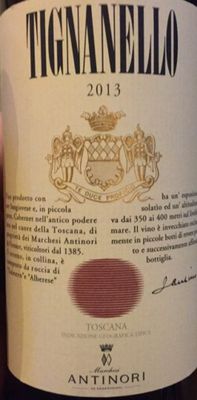
The #8 wine as selected by Wine Spectator is: Antinori Toscana Tignanello 2013 ($105: cases imported: 2,500). Hey! The PLCB stocks this one too, in 5% of their stores (wonder if it's going to be marooned in Potter County?) and with a $4 discount off list. Even a blind hog finds an acorn now and then.
The #7 wine as selected by Wine Spectator is: Ridge Monte Bello Santa Cruz Mountains 2012 ($175: cases bottled: 5,243). Nope, the cube rats missed this one too, although they do have a six years older vintage that would have been around in the "let's store wine in trailers in the sun" days. 
Well, getting two out of four so far was unexpected. I'll be doing another set soon, and we'll see if they can keep up their average.


Monday, June 13, 2016

What happens when you "Free the Market" ?

When you don't have a police enforced state monopoly that needs to be "loosened up" for the Democratic convention you have this:


While not a real ad from Total Wine it is the reality of the difference between PA and the freedoms enjoyed by most states. The PLCB is why we can't have this. The PLCB is why we don't have the selection other places enjoy. The PLCB is why we will never have the convenience wanted by the majority of the citizens. Do you really think that being able to buy 4 bottles from a bar (since 95% of the licensed prerequisite places are bars) is the same as having 2400 real liquor stores?  And the PLCB is why we will never have the service found in stores that specialize where the owners livelihood depends on the customer coming back not because they have nowhere else they can go but because they want too.

In real stores the customer is king, not the clerks. Privatize.

Monday, February 1, 2016

World Class? The PLCB doesn't even carry the top selling liquor in the world.

Edit: It turns out that the PLCB does carry one brand under the ByeJoe brand name as an SLO (qty 6) and it is listed as "DISTILLED SPIRITS - OTHER (IMPORT)" rather than Baijiu which is the same as listing Jim Beam as Corn Whiskey and not Bourbon. The point of the blog remains true.
******

When you are the arbiter of everything liquor you have to be extraordinarily aggressive at supplying the wants and desires of ALL the population. If you're the only source, after all, they have no other recourse, so you need to go out there and get the products the public wants and not what you feel like supplying!

Or you can just be extraordinarily passive and only do the minimum because you don't have to put forth the extra effort. You don't want to keep track of all those things because you have a hard enough time with what you do carry.

We live under the latter here in PA. Case in point. The PLCB doesn't carry the largest-selling liquor in the world.  Nowhere in the entire state: not on the shelf, not SLO, not on the crappy website. If you visit other states, does every private liquor store carry it? Certainly not, but then, they don't have to fill the wants of an entire state, either. Do other states carry this item that the PLCB has deemed not worthy to offer the citizens? You better believe it. I found it in New England, the mid-Atlantic, the South, and the West without too much trouble; in private stores, I might add. The control states like Pennsylvania fared pretty poorly.

You may be wondering how the PLCB can claim to be "world class" in their selection (which they claim often) when they don't have the wold's biggest-selling category of spirits. Simple: they aren't, since there are hundreds of stores in the country that carry more products on the shelf than any state store. The PLCB fudges their numbers claim by counting items you can order from private distributors....just like anyone in the real world of retail can do too. The fact is that the PLCB's on-the-shelf selection is beaten soundly by many stores all over America including many in other control states.

Have you figured it out yet? You may have: the mystery product is Baijiu, the largest-selling liquor in the world not only by volume, but value too. It's acknowledged as the national drink of China. There are seven times as many ethnic Chinese in Pennsylvania as there are ethnic Japanese, but you'd never know that looking at the shelves of the state stores. Perhaps Chinese restaurants, of which there seem to be quite a few around, might want to serve traditional liquor with their meals...just not in Pennsylvania where they have no selection, no choice, no freedom, and no voice in changing things.

Sorry, you'll have to go to Jersey. Again.
Lack of selection and market knowledge is one of the many prices that Pennsylvanians pay for by keeping the PLCB. Another is agility or the ability to spot trends and market forces and react to them. When you are a government agency more interested in how many more years you have to hang on until retirement, keeping up with or leading your competition doesn't enter the picture. You have no competition and don't care if you keep up with the private sector, because your citizen prisoners can only buy what you decide to let them buy anyway.

You'll get what we allow you to get when and if we allow you to get it.
The time has come to rid ourselves of this third-world class mistake and let the free market satisfy the wants and needs of the consumer, like they do for almost everything else you buy.

Tuesday, June 30, 2015

The ISSU decides the PLCB isn't so bad.(for the moment)


Our friends at the ISSU (Independent State Store Union, the union of the liquor store managers) have been fairly quite about privatization, I guess it is hard to side with the PLCB when you have said:

"The PLCB/industry makes a mockery of the control system for the common good when encouraging and incentivizing people...(4/13/11)"


"No other state in the country takes a more derelict approach to alcohol policy."

“With this announcement the PLCB continues to foster a climate of increasing consumption which is incongruent with their responsibility to establish policies intended to minimize the harms of alcohol (4/28/11)"

These were pretty good too:

"And, in pursuit of their delusional effort as a wannabe “world class retailer" , they have also implemented multi-million dollar advertising campaigns for the promotion of alcohol sales" (12/9/11)

"In their lust to act as a ‘world-class retailer,’ the current management with the PLCB has denigrated all past and present employees..."(6/21/11)

"The schizophrenic model of the current PLCB Board and management is anathema to reasonable control and responsible alcohol policy."(6/21/11)

I'm sure if you said the same about your boss you might be looking for a new job.

So in only the third press release in the past few years about privatization the ISSU decided it was better to protect their jobs then to continue to tell the PLCB they are incompetent and came out with the following.  I'll inject some comments as you read it.

SOS...how appropriate.


This may be your last chance to voice your opposition to the bill to your elected officials. Call your state senator and state representative NOW and tell them to vote NO on House Bill 466!

June 29, 2015
In an attempt to provide additional revenue for the 2015-2016 budget, the Senate is poised to consider a bill that would divest the state of the current liquor store system. While it has been widely stated that the current liquor privatization plan will generate an additional $220 million for the General Fund, one aspect of the plan has not received nearly as much publicity - where the additional $220 million comes from.

The simple and honest answer is from the pockets of consumers through higher shelf prices on liquor and wine.

As Senator McIlhinney pointed out Sunday morning on the CBS 21 news show Face the State and again Sunday evening in a Senate Law and Justice Committee meeting, we cannot divest the current liquor system, maintain current revenue and generate an additional $220 million without expecting the cost of liquor and wine to increase dramatically.

So much for the promise of "better prices" under a privatized system as promised by privatization advocates over the last four years of this debate.

Like other retail items you buy, every single one in fact, the price is not the same everywhere.  Mr. Troyan somehow forgot to mention the license fees, business taxes, increased employment, increased sales and reduced border bleed due to greater convenience, the reducing of public debt and the lease of the wholesale business in his letter....I wonder why? All those revenue streams don't exist under modernization and those supporters claimed they could get an extra $185 million without those revenue streams so is $220 million that far fetched?

The PLCB operates on an effective 45.2% markup so that does leave room for profit in a private setting. Will you pay the same for a bottle of JD at a smaller local store as you would at a larger liquor store? I doubt it, but then you pay more for milk in a convenience store than a grocery store too.  Same idea here.


Since the current privatization plan being considered by the Senate will increase the number of establishments selling wine and liquor for off-premise consumption from 600 to nearly 14,000, product selection will suffer as well. Very few of those 14,000 locations will stock the number of items available at the current state stores. The number of outlets will dictate that the overwhelming majority of retailers will limit their stock to the top ten or twenty items.

So, there goes the second major promise - better selection - that privateers have used to win public approval of their privatization efforts.

If only 5% of all stores stock more than the state stores we will still be better off (5% of 14,000 is 700 and the state only has 605 stores now) You can be assured that real superstores will want your business, stores that have more items on the shelf than the entire state does now. Of course not everyplace will have that anymore than every town has a Jaguar dealer. Consumer demand will decide not a bureaucrat in Harrisburg.

That leaves "convenience" as the only remaining argument to justify the divestiture of the current liquor system. Under this plan, "convenience" translates into 14,000 locations offering only the top ten or twenty products at highly inflated prices.

Are your constituents willing to pay the cost for this so-called "convenience"?
Pennsylvania already has the cleanest and safest liquor stores that carry a greater selection at a cheaper price than nearly all other privatized states.

While I know Mr. Troyan is trying to make a point he isn't doing a very good job. Having one place to buy beer,wine and spirits is only "so called" convenience to him for some reason  How many different soft drinks are in your local store? What is a larger seller, wine or soda and which has a higher margin? Do you really think stores will only have 20 items? Just something to think about.

Since PA is the second largest purchaser of wine and spirits in the US  for retail (8th for wholesale) one would think we would have the best prices but here is Mr. Troyan admitting that some private states do better. Maybe not entire states but certainly there are stores surrounding PA that do better on a regular basis. He apparently hasn't been to a Total Wine, Joe Canal's, Moore Brothers, State Line, Binny's, BevMo or a raft of others across the country that have more selection than any 2 PA stores put together. Some are even larger than any 2 state stores put together.


Please OPPOSE HOUSE BILL 466 and efforts to privatize and divest the current state store system.
Sincerely,
Michael A. Troyan, President
Independent State Store Union

Lastly, Mr. Troyan forgot one thing.  GOVERNMENT SHOULD NOT BE IN RETAIL AND ATTEMPT TO REGULATE THEIR COMPETITION AT THE SAME TIME.

People should be able to choose what they want and not have the state choose for them. Contact your legislators and tell them to support liquor freedom.

Monday, April 27, 2015

Can we talk, about these talking points?

Everything below is taken from the March UFCW Wine And Spirits Council talking points. This is what the State Store clerks' union is encouraging their members to use in communications with legislators and public groups to convince them that normalization of the State Stores would be a disaster. We found a few issues with their issues.


  • This legislation risks the over $566 million in annual contribution from the PLCB.
Sounds terrible! Except that the PLCB has never contributed $566 million. They did collect taxes, but so did the Department of Revenue -- sales taxes, income taxes -- and they don't claim to have "contributed" $23 billion to the State.
  • States that have privatized in the past, such as Iowa and West Virginia, saw dramatic decreases in revenue after they privatized their liquor systems.
But the report on privatization commissioned by Governor Corbett to study the effects of privatization based on the HB 790 plan that PFM* produced, the report that's so frequently quoted by opponents, says this: "Privatization was deemed successful (in Iowa) from a revenue standpoint, with profits increasing by $125 million over the first 11 years of privatization compared to estimates under State control of the stores." Of course, Iowa and West Virginia only privatized retail, not wholesale, and Iowa lowered taxes too. Iowa has over 1,200 places to buy liquor now, with 25% of Pennsylvania's population. And a lower DUI fatality rate.
  • PFM predicts there will be 10-­30 wholesalers who will carry a wide array of products in a private wholesale system. This is simply not true in other privatized states, due to only 1 or 2 wholesalers usually operating in private states.
Let's see how true that is. I can name over a dozen wholesale distributors in Washington State in only two years since they privatized. 1. Click 2. Columbia 3. Crown 4. King 5. Marine. 6. Pioneer 7. Stein 8. Vehrs 9. Clatsop 10. Dickerson 11. Maletis 12. Midway 13. Olympic Eagle 14. Sound 15. Tripp 16. Young's 17. Southern.
New York has at least 40 just for wine. Pennsylvania has one - the PLCB. Of course, you don't even need to guess how things will be in a privatized system in Pennsylvania, you can just look at beer. There are over thirty beer wholesalers in the Commonwealth. This one isn't even close.

  • ... $1.4  billion over five years that will cost the state to transition from a public system to a private system according to the PFM report commissioned by former Governor Corbett. 

This is a lie that has been told over and over and over, to the press, to the Legislature, to the public, and it simply isn't so. The actual first heading on page 186 of the report is "Total Agency Operating and Transition Costs." So the $1.4 billion is the system's normal operating costs plus any transition costs. The operational costs are almost $1.2 billion! With a little math, you can figure out how much the cost is to keep the PLCB using the very same report. Over $2.2 Billion. How do you like me now?
  • This proposal has the potential to put alcohol on every corner possible.
This is just fear mongering. HB 466, the current bill the passed the House, doesn't even get the state up to the national average for liquor stores, let alone for retail wine outlets. To hit average for 12.8 million people, we would need to have over 2400 liquor stores, and over 6,000 grocery stores selling wine.
  • A peer-­reviewed study from a U.S. Centers for Disease Control Task Force recommended against any further privatization.    
While the statement itself is true, the entire study methodology and results were debunked by STATS.org. (Debunked by Forbes, too.) This study also said that privatization would lead to a 44% increase in consumption which hasn't happened in any state that privatized any or all of their liquor system. Not even close.
  • Studies show that state employees have a much higher rate of carding minors than the private sector does.
Maybe, but Pennsylvania state stores are NEVER checked for compliance, except by "internal" audit. So you can't make a factual statement that it is happening here.
  • The Turzai privatization proposal will lead to increased prices and decreased selection.
Somebody on the Council needs to stand in the middle of a Super Buy Rite or a Total Wines or Joe Canal's or BevMo or Binny's and say that. How selection is decreased when a store has more items on the shelf that the entire state of Pennsylvania stocks must be some kind of magic.
A real New Jersey Liquor Store; not near Philly or New York, either.
  • No where in the private sector can you find that type of selection in each and every store in the state.
One size doesn't fit all and nowhere in the state can you even begin to find something like the store shown above. Not every PA State Store even has the same stock, and neither will every private store, but you'll certainly be able to find more in the private market.
  • The proposal eliminates the 30% markup, yet keeps the 18% Johnstown Flood tax. This will result in dramatic price increases. 
Since the PLCB operates at an effective 45.2% markup and private business is far more efficient there seems to be some room to work with. Will everything be cheaper everywhere? No, just like one store doesn't have the cheapest price on everything. But then, the PLCB doesn't either.
  • Prices have gotten so high, that Washington consumers have been driving across the border to both Oregon and Idaho.
Having lived in Washington State, I can tell you first hand: Washington had the highest liquor prices in the country before they privatized. Adding 27% in new "fees" at the time of privatization certainly didn't help. Although they did drop the fee schedule to just an extra 22% recently. Idaho has said their sales are up 7% along the border. Oregon is about the same. The total Washington yearly border bleed is less than 2 weeks of current PA border bleed, so what does that tell you?
  • Those who purchased the former state liquor stores from Washington State are already out of business, as they were not able to compete with Costco, Safeway and others.
The one thing that hurt small liquor store owners in Washington was the WSLCB. It was just as bad in making decisions and rulings as the PLCB. They ruled that the small stores had to pay tax on resale product while larger distributors didn't, making the small stores products 17% more expensive for the bars and restaurants that they were selling to. That ruling has since been overturned, but it took over a year to do it. Box stores are still not the majority of sales in Washington. Small stores can compete just fine if given a level playing field. Look at New Jersey and California if you need examples.
  • The Turzai proposal will lay off 5,000 Pennsylvanians who work in the Wine and Spirits stores.
Well...there aren't 5,000 people who work for the PLCB (total staff of 4,597 as of 3/15) and certainly not all of them work in the state stores (not with the bloated management structure that is in place). Nor will they all get laid off, either. There will still be a need for administration, licensing, audit and what have you. And a third of the employees in the stores are part-time.


The Wine and Spirits Council seems to believe that consumers, and more importantly, legislators, can't learn from what other states did. That we can't put in place an even better system based on real world data, and not bad reports formed from junk science, or scary commercials where family members get killed off one by one.

Private systems work: just look at how you buy everything else. We don't need State Stores or the people in them to sell a legal product. There are 27,000 licensed establishments in the state and none of them have state workers standing behind the bar, serving or managing. We aren't safer, we aren't better served, and we aren't satisfied and never will be by a state run system.


*Much of the UFCW's "scientific" support for the State Stores as a bulwark against booze-fueled lawlessness leans on a CDC "taskforce" report, largely exposed as junk science by this piece. They lean on cherry-picking out-of-context nuggets on the economics from a report on the impact of liquor privatization prepared by PFM, a Harrisburg think tank. Have a look for yourself; why trust the UFCW, why trust us?  

Monday, January 19, 2015

The PLCB: Where luxury starts one step above Mad Dog.

Luxury — Merriam-Webster defines "luxury" as "something that is expensive and not necessary."
Just a tad below 'Luxury', says the PLCB
The January PLCB product catalog lists 11,146 luxury wines starting at $5.49, which to me seems to be a bit of an oxymoron, since that's only 50 cents more than Mad Dog 20/20...which is definitely not a luxury (although it is "not necessary"). In comparison, there are only 2,451 "regular" wines listed, with the most expensive non-holiday offering being $155 — but that isn't luxury, according to the PLCB.

82% of the non-SLO wines listed are Luxury items, including all of the so-called "Chairman's Selections", and ALL of these wines are selected by the Luxury Product Team...six people in Harrisburg. The PLCB says that "Luxury Product wines are personally selected by our Luxury Product Team." Since there is also a Chairman's Selection team and all Chairman's Selections are Luxury items, I guess they get selected twice.

The selection criteria is stated as, "The products are managed geographically and reviewed for soundness, price/value relationship, and market appeal. The luxury division reviews wines during offering periods throughout the calendar year to insure a constant flow of the world’s best wines into our premium collection stores." No mention about tasting, just the marketing, which given that there aren't any highly wine certified people in the PLCB makes sense....unless you are a consumer who isn't allowed to go anywhere else and choose for themselves. 

Could you imagine 6 people actually trying to taste 11,000+ wines that would be only...let's see...11,146 divided by six is 1,857 each, over 240 work days, or just under 8 wines per day every work day.  Doable but not feasible.Or maybe they get together every Friday and do 38 different wines each.  More likely they don't try the majority of the wines selected as "Luxury."

The PLCB where Luxury starts at $5.49. God help us rid ourselves of these idiots.

Privatize.

Wednesday, November 19, 2014

4 for 25. Pitiful isn't it? Want the best wine - shop out of state.(corrected)

Rejoice Citizens! Out of 101,000 cases for the Wine Spectators top 25 wines your PLCB managed to secure about 10 of them! 

In a stunning display of wine buying ineptitude those highly qualified, knowledgeable (so we're told) buyers responsible for satisfying the wants of almost 13 million citizens of the Commonwealth managed to select even fewer of the Wine Spectator top 25 wines this year than last. With numerous private stores across the country doing as well or better one has to wonder how they do it with such limited buying power and no PLCB experts on hand to help them.

This yet again proves that to be a savvy wine consumer in Pennsylvania one only has to travel out of state


Without further ado, Wine Spectator's #11-25.

11. Mt. Eden Vineyards Chardonnay Santa Cruz Mountains 2011, 1,692 cases.  
      Not available in PA
12. Château Guiraud Sauternes 2011, 7,000 cases.
      Not available in PA
13. Fonseca Vintage Port 2011, 2,190 cases.
      I originally listed this as Not available in PA but if you search for porto instead of port it shows up.  My bad.
14. Fontodi Colli della Toscana Centrale Flaccianello 2011, 4,000 cases.
      Not available in PA
15. Bedrock The Bedrock Heritage Sonoma Valley 2012, 500 cases.
      Not available in PA
16. Two Hands Shiraz Barossa Valley Bella's Garden 2012, 6,000 cases. 
      Not available in PA
17. Soter Pinot Noir Yamhill-Carlton District Mineral Springs Ranch 2012, 1,500 cases.  
      Not available in PA
18. Château Doisy-Védrines Barsac 2011, 3,500 cases.
      Not available in PA
19. Luca Malbec Uco Valley 2012, 7,000 cases.
      Not available in PA
20. Peter Michael Chardonnay Knights Valley Ma Belle-Fille, 2,080 cases
      Not available in PA
21. Castello di Volpaia Chianti Classico Riserva 2010, 4,000 cases.  
      Not available in PA
22. Podere Sapaio Bolgheri Volpolo 2011, 7,500 cases.  
      Not available in PA


23. St.-Cosme Châteauneuf-du-Pape 2010, 1,300 cases. Hey, we've got some! There were 4 bottles left in the entire state Monday morning. Better hurry...because you know the clerks won't hold them.


24. Massolino Barolo 2009, 3,165 cases.  
      Not available in PA
25. Bodegas y Viñedos O. Fournier Malbec Uco Valley Alfa Crux 2010, 1,250 cases.
      Not available in PA


Thursday, October 2, 2014

What does it take to wake up the PA Senate?


Something for all the Democratic and RINO senators to think about as they prepare once again to avoid voting for what the plurality if not majority of people want: privatization and de-monopolization of the sales of spirits, wine, and beer.

Privatization does not increase underage drinking.  According to the U.S. Department of Health and Human Services, 29 percent of those ages 12-20 consumed alcohol in Pennsylvania. Compare this to states that have far less government control such as West Virginia (which is also a control state for wholesale) and the number decreases to 24 percent. In fact, the United States average is 27 percent. If government controlled liquor is effective in curbing underage drinking, why are we 2 percentage points higher than the national average and higher than almost all our neighboring states? Why is our underage DUI fatality rate higher than all but one border state?

Privatization does not cause more drunk driving, cause more alcohol related accidents or more alcohol related fatalities. Pennsylvania is once again barely average or worse. In alcohol related traffic fatalities in 2012, Pennsylvania was at the national average of 3.3 per 100,000. If the current government monopoly is better suited for curbing drunk driving, why are we not ahead of the national curve? Furthermore, MADD ranks the states in order of DUI-related accidents per capita. Pennsylvania ranked 35th best – lower than New York, New Jersey, New Hampshire, West Virginia, Virginia, and Ohio. Obviously the median here is 25; Pennsylvania being 10 states away. In 2010 overall alcohol related deaths, Pennsylvania is also surpasses neighboring states. Pennsylvania reported 26 per 100,000 residents. Compare this to 24 in Delaware, 22 in Maryland, 20 in New Jersey, 20 in New Work, and 25 in Ohio.

In the 2 years since Washington privatized DUI fatalities have decreased at a far faster than in Pennsylvania even though they started at a lower rate. You now have a 36% less chance of being killed due to an alcohol related accident in Washington compared to Pennsylvania.


Privatization increases employment. As President Ronald Reagan used to say, “The best social program is a job.” The labor union UFCW 1776 will tell you that privatization kills jobs, but they are wrong. More than doubling or even tripling the amount of outlets for wine and spirits can only mean more jobs. It’s common sense. If anything, the UFCW saying there won’t be jobs for their members is tantamount to saying they don’t believe their members are employable in the private sector. Every locale that has privatized has seen an increase in employment. New warehouse jobs, new delivery jobs, new store jobs. Places that fully privatized tripled employment in the industry. The ability for these employees to use their previous knowledge to specialize in this new industry could actually increase their earning power.

Privatization will increase revenue. A 2010 study commissioned by the Wine and Spirits Wholesalers of America found that 23.6 percent of the wine purchased by consumers in Pennsylvania comes from out of state, resulting in the loss of $17.3 million in excise taxes. A more recent study conducted for the PLCB showed that 45 percent of residents in Philadelphia and its surrounding counties purchase some or all of their alcohol outside of Pennsylvania. The PLCB's own numbers showed that consumers purchased approximately a quarter of their wine and spirits in other states. This border bleed equals more than $180 million in lost sales, and more than $40 million in lost state tax revenue annually from just a handful of counties. These are lost dollars that could fund programs that are essential to our Commonwealth, but that are instead funding Delaware, Maryland, New York, and other border states with lower prices and increased selection.

Decreasing border bleed through price competition, increased convenience, one-stop shopping and increased selection will increase taxes collected. Increased sales will increase taxes collected. Business will pay taxes the current system doesn’t.  More people working will pay taxes. More people working means more sales across the Commonwealth for everything which also means more total taxes collected.

Privatization will remove the inherent conflicting interests of PLCB sales and enforcement. Quite simply, our current system is a house divided. The same entity charged with licensing vendors and enforcing liquor laws is marketing, selling, and producing alcohol...in direct competition with the private companies it regulates (with a surprising lack of consistency). Under privatization, penalties and fines could become much stricter as the PLCB’s conflicted mission would be resolved. In the new, fully privatized system, the PLCB would license, enforce, and educate; which is the appropriate role of government. The troika of party hacks who make the arbitrary and often inconsistent rulings on licensees' questions about application of the Liquor Code could be replaced by experienced regulators, lawyers who do nothing but apply the Code, full-time. The agency would then be run by a director, not a jumped-up "CEO".

Privatization can renew the people’s faith in their government. Distributing and selling liquor should not be in the hands of a state-run monopoly, which is clearly not a core function of government. There has never been a poll that has been in favor of the state run system. Historically, 40 years of polling show the citizens want a change and that change is to a free market system they see working far better in neighboring states. The lack of reform in the face of overwhelming public support leads citizens to conclude that state government is distant, unresponsive to their wishes, and captive to selfish interests. By responding to the will of citizens and consumers, lawmakers can show that Pennsylvania state government listens and responds to the will of the people they are elected to serve.

(Taken, updated and modified from an April  2013 letter sent by the PA Manufactures Association to the Senate)